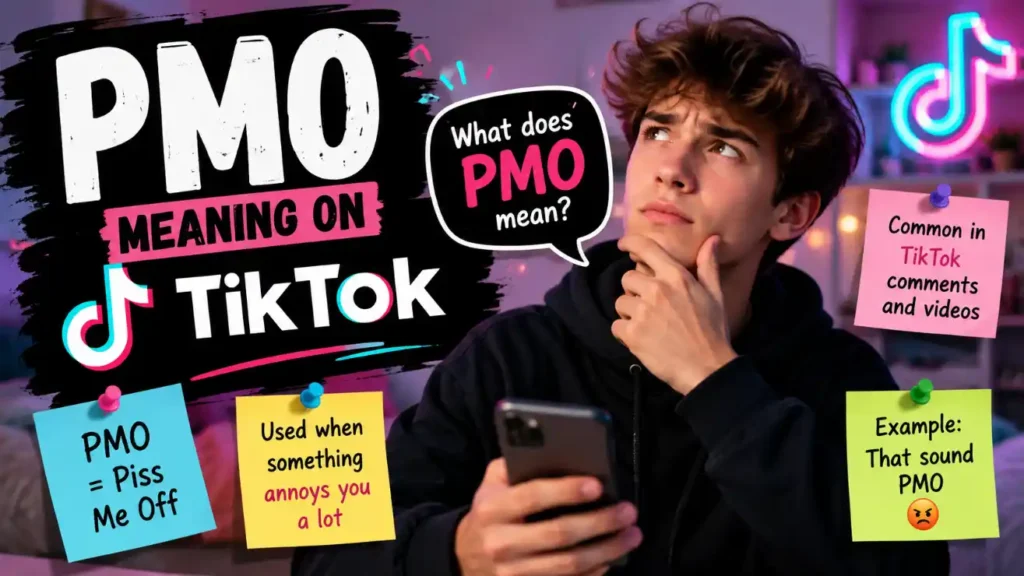
Scroll through TikTok comments or a group chat for long enough, and you’ll eventually run into “pmo.” The PMO meaning you’ll encounter most often online is “pisses me off” a quick way to express frustration or annoyance about literally anything, from a minor inconvenience to something genuinely upsetting.
This guide covers the main slang meaning of “pmo,” the other common things the same three letters can stand for depending on the setting, real examples, and answers to the questions people search most. By the end, you’ll know exactly how to read “pmo” in context and use it correctly yourself.
What “PMO” Means
The simple version:
In texting and social media slang, “pmo” almost always means “pisses me off.” People use it to react to something annoying, unfair, or frustrating.
The fuller picture:
“Pmo” belongs to a wave of newer internet slang abbreviations, popular especially on TikTok and in younger online communities, that condense common frustrated reactions into a few quick letters. It works a lot like “smh” (shaking my head) or “istg” (I swear to god) a fast, low-effort way to signal a strong reaction without typing a full sentence. People use it for genuinely serious frustrations and for small, everyday annoyances alike, and often add extra letters for emphasis (“pmooo”) the same way people stretch out words when talking.
Outside of casual slang, the same letters stand for a few unrelated things depending on the context:
- Project Management Office a common term in business, referring to a department that sets and oversees project management standards within an organization
- Prime Minister’s Office used in government and news contexts, especially in countries with a parliamentary system
- Post Money Order or other niche abbreviations specific to certain industries or communities
Context makes the meaning obvious almost every time. In a text or comment, “pmo” means “pisses me off.” In a business meeting or corporate job posting, it almost certainly means “Project Management Office.” At international news, “PMO” often refers to a head of government’s office.
Origin and History
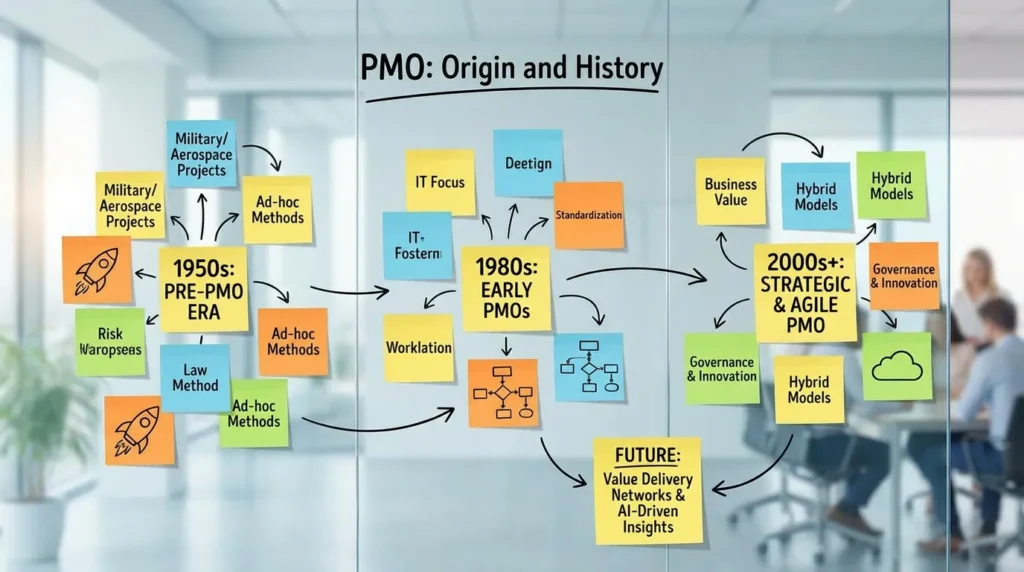
Like most internet slang, “pmo” grew out of the broader trend of shortening common phrases for faster typing, first through SMS texting and later through platforms like Twitter, Instagram, and especially TikTok, where quick, punchy comments spread fast. It sits alongside a long list of similar frustration-based abbreviations, including older ones like “smh” and newer ones that rise and fall in popularity within online youth culture.
No single person or platform gets credit for coining “pmo” like most slang of this kind, it spread organically through repeated use in comment sections, captions, and group chats until enough people recognized it for it to stick as an established piece of internet shorthand, particularly among younger users.
The unrelated meanings Project Management Office, Prime Minister’s Office, and other field-specific uses developed independently in business and government long before this slang usage existed, and they simply happen to share the same three letters.
Different Meanings and Contexts
Texting and social media (most common). “Pmo” means “pisses me off.” People use it to react to frustrating, annoying, or upsetting situations, big or small.
Business and project management. “PMO” stands for “Project Management Office,” a team or department responsible for setting project standards, methodology, and oversight across an organization. This usage appears constantly in job titles, corporate structures, and business writing.
Government and politics. “PMO” commonly refers to the “Prime Minister’s Office” in countries with a prime minister, especially in news coverage and official government communications.
Other niche or industry-specific uses. Depending on the field, “PMO” can stand for other terms specific to that industry, always worth confirming from context if the casual slang meaning doesn’t fit.
Examples of “PMO” in a Sentence
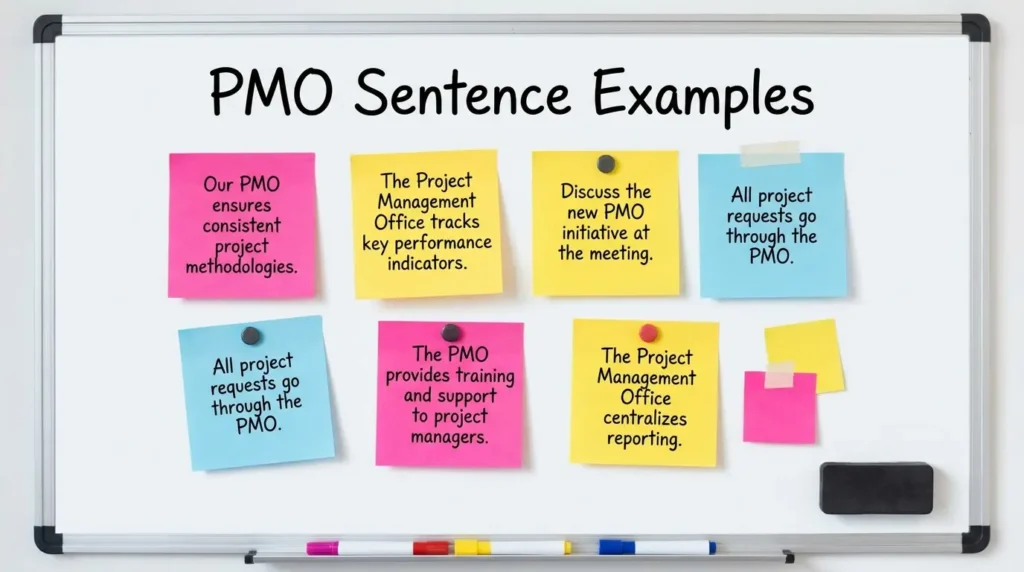
- “It is when people chew with their mouth open.”
- “The traffic this morning was so bad, I was late for everything.”
- “Not gonna lie, that comment is kind of pmo.”
- “It pmo because they canceled the event with zero notice.”
- “She said the noise from upstairs pmo every single night.”
- “Losing my phone charger for the third time this month pmo.”
- “It pmo when people leave you to read for days.”
- “Honestly the whole situation is just pmo at this point.”
- “It pmo how expensive everything’s gotten lately.”
- “Getting stuck in that meeting for two extra hours pmo.”
How to Use “PMO” Correctly
“Pmo” typically works as a verb phrase standing in for “pisses me off,” often dropping the subject entirely in casual speech (“that pmo” instead of “that pisses me off”).
A few usage notes:
- Lowercase is standard. Casual texting and comments almost always use lowercase “pmo,” even at the start of a sentence.
- It replaces the full phrase, not just part of it. “Pmo” stands in for the whole expression “pisses me off,” so people generally don’t add extra words like “pmo off.”
- Match the setting. “Pmo” fits texts, comments, and casual captions. In professional writing, spell out “frustrates me” or “annoys me” instead.
- Watch for the acronym clash. In business or government writing, capitalized “PMO” almost never means “pisses me off” ; readers will assume a field-specific meaning, so spell things out if there’s any chance of confusion.
Common Mistakes to Avoid
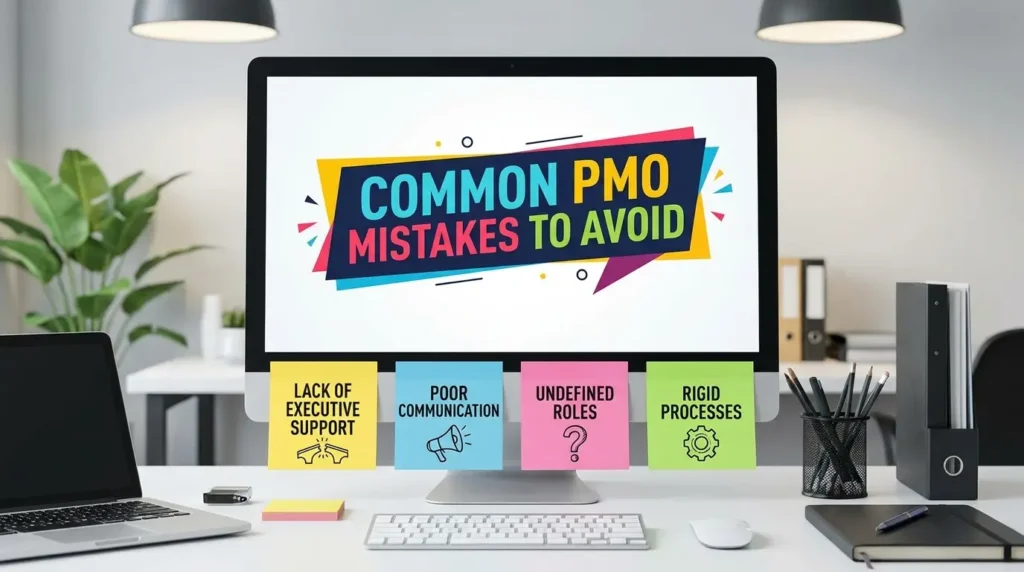
- Using it in formal writing. “Pmo” reads as very casual slang. Professional emails, reports, and cover letters call for plain language instead.
- Assuming it always means “pisses me off.” In a business or government context, capitalized “PMO” usually refers to something else entirely, checking the surrounding text before assuming.
- Adding unnecessary words after it. Since “pmo” already stands for the full phrase, tacking on extra words can create an awkward, redundant sentence.
- Missing the tone. Depending on punctuation and context, “pmo” can signal anything from mild annoyance to real anger. Don’t assume the intensity without reading the rest of the message.
Similar Words and Phrases
| Phrase | Meaning | How It Differs |
| smh | Shaking my head | Expresses disapproval or disbelief, not necessarily anger or annoyance |
| istg | I swear to god | Emphasizes sincerity or frustration but isn’t specifically about anger |
| irks me | Mildly annoys me | A gentler, more old-fashioned way of expressing a similar feeling |
| grinds my gears | Really annoys me | A more vivid, idiomatic way to express the same core frustration |
| gets on my nerves | Continuously annoys me | Implies repeated or ongoing annoyance rather than a single moment |
Opposite Words and Phrases
| Phrase | Meaning | Why It’s an Opposite |
| makes my day | Brings genuine happiness or joy | Directly opposite emotional reaction to “pmo” |
| I love this | Expresses enjoyment or approval | Positive reaction instead of frustration |
| this is great | Signals satisfaction or approval | Contradicts the annoyance “pmo” expresses |
| no complaints | Indicates contentment | The literal opposite of expressing frustration |
Pronunciation
People almost never say “pmo” out loud as a word; it’s read as three separate letters: P-M-O. In speech, most people simply say “pisses me off” instead of spelling out the abbreviation.
Quick Facts
| Fact | Detail |
| Most common meaning | “Pisses me off” |
| Origin | Internet and texting slang, popularized on platforms like TikTok |
| Capitalization | Lowercase in casual slang; capitalized “PMO” usually means something else (Project Management Office, Prime Minister’s Office) |
| Part of speech | Verb phrase substitute |
| Common setting | Texts, comments, captions, casual chat |
| Formality | Very casual avoid in professional writing |
Frequently Asked Questions
What does “pmo” mean in texting?
It means “pisses me off.” People use it to react to something frustrating, annoying, or upsetting.
Is “pmo” always about anger?
Not necessarily severe anger it covers a wide range, from mild annoyance to real frustration, depending on the situation and tone.
What does “PMO” stand for besides “pisses me off”?
Depending on context, “PMO” can stand for “Project Management Office” in business or “Prime Minister’s Office” in government and news.
Should I capitalize “pmo” when texting?
No, lowercase is standard in casual texting. Capitalizing it can make readers think you mean a different, unrelated abbreviation.
Can I use “pmo” in a work email?
It’s best to avoid it. Spelling out “frustrates me” or “annoys me” for a more professional tone, especially since “PMO” already has an established business meaning.
Where did “pmo” come from?
It grew out of general internet slang culture, spreading especially through platforms like TikTok, where short, punchy reactions travel fast.
Does “pmo” mean the same thing in every online community?
Mostly, yes, for the “pisses me off” meaning among casual texting and social media users. In specific fields like business or government, the same letters point to something else entirely.
Is “pmo” a new slang term?
It’s part of a newer generation of internet abbreviations, gaining wide popularity more recently than older classics like “lol” or “smh,” though exact timing is hard to pin to one moment.
Key Takeaways
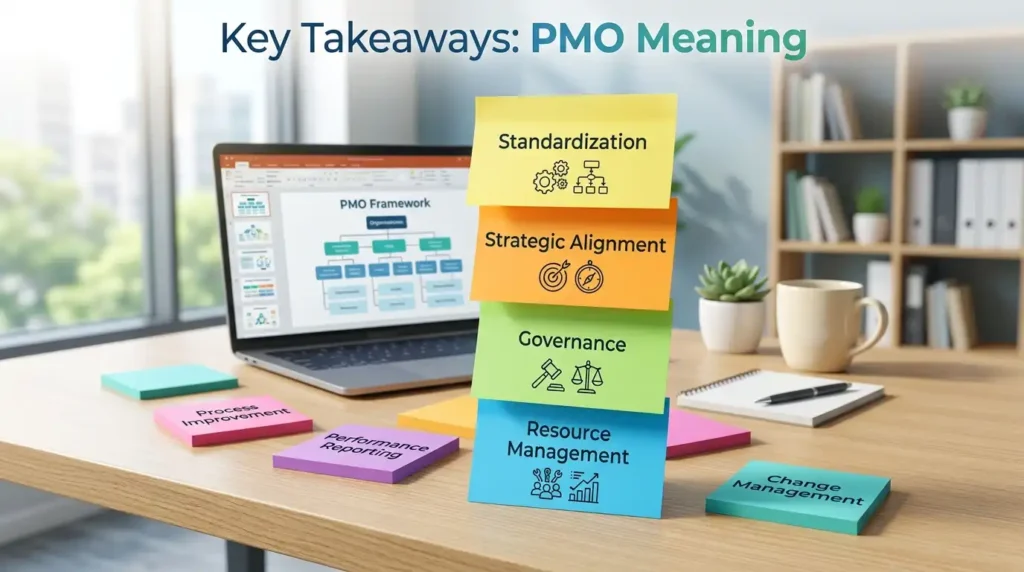
- “PMO” most commonly means “pisses me off” in texting and social media slang.
- People use it to react to anything from small annoyances to real frustration.
- Capitalized “PMO” often stands for something unrelated, like “Project Management Office” or “Prime Minister’s Office” context decides the meaning.
- Keep “pmo” lowercase and casual, and use plain language in formal writing.
- The phrase stands in for the whole expression “pisses me off,” so it doesn’t need extra words attached.
Conclusion
“Pmo” fits neatly into a long tradition of internet shorthand that turns a common feeling into just a few letters fast to type, instantly recognizable, and expressive enough to carry real emotion in a comment or text. Once you know it, you’ll start noticing it everywhere frustration shows up online, from minor daily annoyances to genuine complaints.
The main thing to watch for is context. The same three letters mean something completely different in a business meeting or a news headline about a head of government, so a quick check of the setting will always tell you which “PMO” you’re actually looking at.
Next time something small (or not so small) sets you off, you’ll have the exact slang ready to go and next time you spot “pmo” in someone else’s comment, you’ll know exactly what they’re feeling without needing to ask.

I am Stephen King an American author known for compelling storytelling. At writemora.com, we value clear, accurate, and reader-focused content inspired by excellence in writing.