
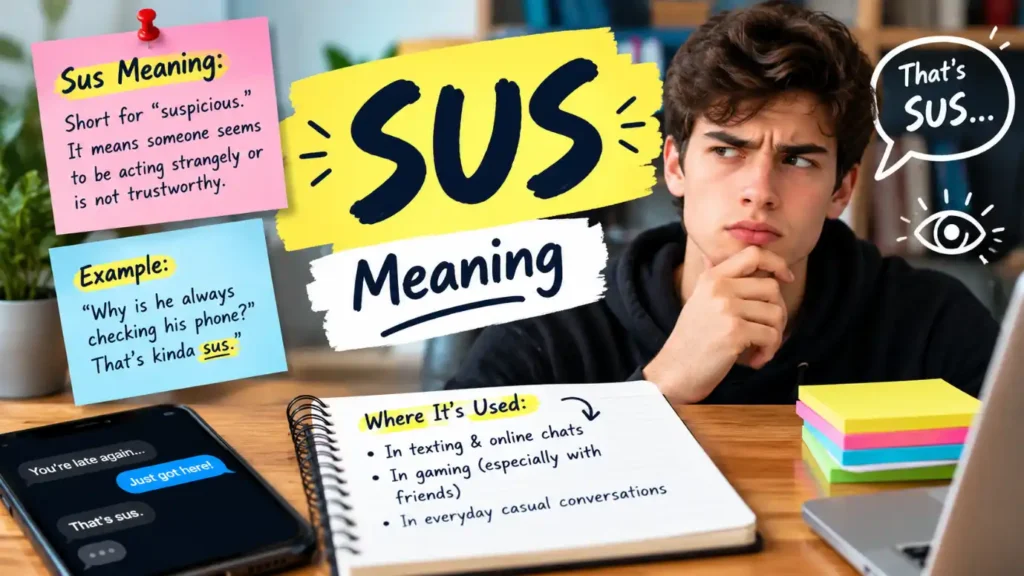
Sus is informal slang for “suspicious” or “suspect.” People use it when someone or something seems strange, shady, questionable, or untrustworthy. You may see “sus” in texts, social media comments, gaming chats, and casual conversations. The word became especially popular through Among Us, but it existed as slang before the game.
Key Takeaways
- Sus usually means suspicious, questionable, or not trustworthy.
- It is commonly used in texts, chats, memes, gaming, and social media.
- Among Us helped make the word widely popular online.
- Calling something “sus” expresses doubt; it does not prove that something is wrong.
- Sus is casual slang, so suspicious is usually better in formal writing.
What Does Sus Mean?
The simplest sus meaning is suspicious or suspect. When someone says, “That’s sus,” they usually mean that something feels strange, questionable, or not quite right.
For example:
“His story sounds sus.”
This means the person does not fully believe the story or thinks something about it seems suspicious.
Sus can describe many different things. You can call a person’s behavior sus, a message sus, a website sus, an excuse sus, or even a situation sus.
For example:
- “That website looks suspicious.”
- “Why are you acting sus?”
- “Her excuse was pretty bad.”
- “That deal sounds sus.”
- “Something about this situation is sus.”
The word is usually informal and often has a playful tone. However, it can also communicate genuine doubt or concern.
What Does Sus Mean in Texting?
In texting, sus is a quick way to say that something seems suspicious or questionable. Because texting favors short, easy-to-type expressions, slang such as sus can replace longer words without changing the basic idea.
If a friend tells you, “I didn’t eat the last slice of pizza,” while standing next to an empty pizza box, you might reply:
“Hmm… sus.”
Here, you are probably joking rather than making a serious accusation.
The tone depends heavily on context. A message such as “That link looks sus” could be a genuine warning, while “Why are you smiling like that? Sus 😂” is probably playful teasing.
Common Texting Examples
| Text | Meaning |
| “That excuse is sus.” | The excuse seems questionable. |
| “You’re acting sus.” | Your behavior seems strange or suspicious. |
| “This link looks suspicious.” | The link may not be trustworthy. |
| “That price is sus.” | The price seems unusually suspicious or unrealistic. |
| “Bro, that’s sus 😂.” | Something seems funny, strange, or questionable. |
What Does Sus Mean in Among Us?
The word sus became strongly associated with the video game Among Us. In the game, players try to identify hidden Impostors while completing tasks. When a player behaves suspiciously, other players may call that person “sus.”
For example:
“Blue is sus. They were near the body.”
In this context, sus means that Blue is being suspected of being the Impostor.
However, being called sus does not necessarily mean that the player is actually the Impostor. It simply means that their behavior has caused suspicion.
This distinction is important outside gaming too. Saying something is “sus” usually means “I have doubts about this”, not “I have proven that this is wrong.”
Among Us helped turn the word into a major internet expression, especially during the game’s huge rise in popularity in 2020. The term then spread through memes, livestreams, Discord, social media, and everyday online conversations.
Where Did the Word Sus Come From?
A common misconception is that Among Us invented sus. It did not.
The slang term existed before the game. Historical evidence records sus as an abbreviation associated with suspect or suspicious well before Among Us became popular.
Merriam-Webster’s historical information gives 1955 as a first-known-use date for the adjective sus meaning suspicious or suspect. Other historical slang records show related uses even earlier.
Among Us was released in 2018, but its popularity exploded later, particularly in 2020. The game’s central idea of identifying a suspicious Impostor made sus an especially natural word for players to use.
So the most accurate way to describe its history is:
Sus existed before Among Us, but Among Us made it much more famous.
Is Sus Short for Suspicious?
Yes. In modern slang, sus is generally understood as a shortened form of suspicious or suspect.
It is not normally an acronym where each letter stands for a separate word.
For example:
suspicious → sus
This shortening makes the word faster and more casual. Similar forms of internet slang often become popular because they are easy to type and easy to understand from context.
You may also see the related spelling suss, although sus is the form strongly associated with modern internet slang.
Is Sus Rude or a Bad Word?
Sus is not generally considered a profanity or a serious swear word. It is casual slang.
Still, calling someone sus can sometimes sound rude depending on the situation. If you say, “You’re sus” to a friend while joking, it may be harmless teasing. If you accuse a stranger or coworker of being sus, it could sound distrustful or insulting.
The context and tone matter.
For example:
Playful:
“You ate the last cookie? Sus.”
More serious:
“That website is sus. Don’t enter your credit-card information.”
Potentially rude:
“You’re acting sus. I don’t trust you.”
In formal writing, professional emails, academic work, or official communication, suspicious, questionable, or untrustworthy will usually be more appropriate than sus.
How to Use Sus in a Sentence
Sus normally works as an informal adjective.
Here are some natural examples:
- “That guy’s story sounds sus.”
His story seems suspicious or difficult to believe. - “Why did you suddenly leave? That’s sus.”
Your behavior seems unusual. - “This email looks suspicious.”
The email seems suspicious or potentially unsafe. - “Her explanation was kind of sus.”
Her explanation raised doubts. - “Red is acting sus again.”
In a game, Red appears to be behaving suspiciously. - “That deal is way too good. It seems so.”
The offer seems questionable or unrealistic. - “You said you weren’t hungry, but you ate my fries. Sus.”
This is a humorous accusation.
One useful feature of sus is that it does not always require a serious explanation. In casual conversation, saying “sus” can communicate an entire reaction in a single word.
Sus vs. Suspicious vs. Shady
These words are related, but they do not always have exactly the same tone.
| Word | Meaning | Tone |
| Sus | Suspicious or questionable | Very casual |
| Suspicious | Causing doubt or concern | Neutral/formal |
| Shady | Dishonest, questionable, or untrustworthy | Informal |
| Sketchy | Unsafe, questionable, or unreliable | Informal |
| Questionable | Worth doubting or questioning | More neutral |
For example, you might tell a friend:
“That guy seems like sus.”
In a formal report, you would more likely write:
“The man’s behavior appeared suspicious.”
The basic idea is similar, but the level of formality is different.
Common Mistakes When Using Sus
One common mistake is assuming that sus always means someone is guilty. It does not.
Calling someone sus means you suspect something or feel that something is off. It does not establish proof.
Another mistake is using sus in formal situations. While many people understand the term, it is still casual slang. A school essay, business report, legal document, or professional email generally calls for a more standard word.
It is also unnecessary to use “sus” every time something is simply unusual. The word usually suggests some degree of doubt, suspicion, or distrust.
Frequently Asked Questions
In slang, sus means suspicious, suspect, questionable, or possibly untrustworthy. People often use it when a person, explanation, action, or situation seems “off.” It can be serious, but it is also frequently used as playful internet slang.
In a text message, sus usually means that something seems suspicious or strange. For example, “That excuse is sus” means “That excuse seems questionable.” The tone can range from genuine concern to friendly teasing.
No. The slang term existed before Among Us. The game helped popularize sus on a massive scale because identifying suspicious players is central to its gameplay. The word later spread throughout memes, social media, gaming communities, and everyday online communication.
No. Sus is not normally considered a swear word. It is informal slang. However, calling someone sus can feel insulting if you are seriously suggesting that they are dishonest or untrustworthy.
“That’s sus” means “That seems suspicious,” “That seems questionable,” or “Something about that feels off.” Depending on the situation, it can be a genuine warning or a humorous reaction.
Conclusion
The sus meaning is simple: suspicious, suspect, questionable, or not quite trustworthy. It is one of those short slang terms that can communicate doubt quickly in a text, game chat, meme, or casual conversation.
Although Among Us made the word especially famous, sus did not originate with the game. Today, you can see it used far beyond gaming to describe questionable behavior, strange explanations, suspicious links, unusual situations, and playful accusations.
If someone says, “That’s sus,” they usually are not saying they have proof. They are simply saying that something feels off.

I am Olivia Brooks an American editor and content researcher dedicated to creating clear, accurate content. At writemora.com, I help readers to understand words, phrases, and modern language with confidence.