
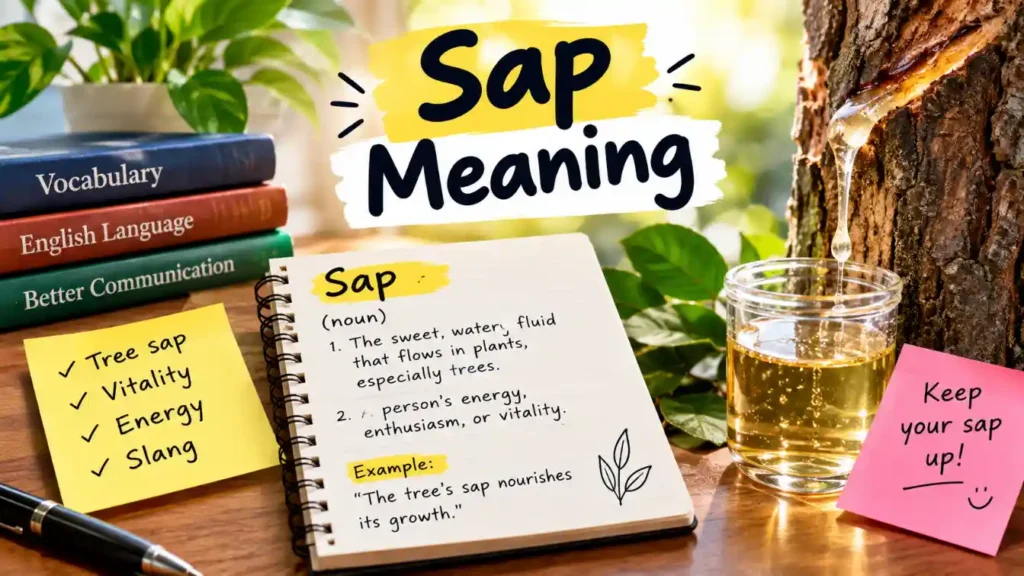
Sap can have several meanings depending on context. As a slang noun, a sap is usually a gullible, foolish, or overly trusting person, and it can also describe someone who is very sentimental or soft-hearted. In nature, sap is the fluid that circulates through plants. In business and technology, SAP refers to enterprise software and the company that develops it.
Key Takeaways
- Sap can mean a gullible, foolish, or easily fooled person.
- It can also describe someone who is sentimental, soft-hearted, or easily moved emotionally.
- In texting, lowercase sap is usually the ordinary English word, not an abbreviation.
- Sap also means the fluid that circulates through plants.
- SAP in business usually refers to enterprise software and the SAP company.
- The meaning is determined mainly by context and capitalization.
What Does Sap Mean?
The word sap has several established meanings in American English. The meaning you should choose depends on how the word is being used.
When someone says, “Don’t be a sap,” they are probably calling the person gullible or foolish. When someone says, “I’m a sap for romantic movies,” the meaning is different: the speaker is saying they are easily touched or sentimental.
In gardening or biology, sap refers to the fluid that moves through a plant. In a business conversation, SAP may refer to the well-known enterprise software company and its business applications.
The Main Meanings of Sap
| Context | Meaning | Example |
| Slang | Gullible or foolish person | “Don’t be a sap.” |
| Emotional | Sentimental or soft-hearted person | “I’m such a sap for love stories.” |
| Nature | Fluid that circulates through plants | “Maple sap is collected in spring.” |
| Verb | To weaken or drain strength | “The long trip sapped my energy.” |
| Business/technology | SAP enterprise software/company | “Our company uses SAP.” |
Dictionary sources recognize both the plant-related sense and the slang sense, as well as the verb meaning “to weaken” or “drain.”
Sap Meaning in Slang
In slang, sap commonly refers to a person who is gullible, naive, foolish, or easy to take advantage of.
For example:
“He paid for the fake ticket. What a sap.”
Here, sap suggests that the person was too trusting and was easily fooled.
The word can also have a softer emotional meaning. Someone may be called a sap because they are sentimental, romantic, or easily moved.
“She cries every time she watches that movie. She’s such a sap.”
In this example, the speaker is not necessarily saying she is foolish. Instead, sap means she is emotionally soft or sentimental.
That difference is important because sap does not always carry the same level of criticism.
Why Can Sap Mean Both Gullible and Sentimental?
The two slang meanings are related because both describe someone whose emotional or mental defenses are seen as being low.
A gullible person may trust people too easily. A sentimental person may allow emotions to influence them strongly. In both cases, the speaker can portray the person as having a “soft spot.”
Context and tone therefore matter more than the word alone.
What Does Sap Mean in Texting?
When you see sap in a text message, it usually means the same thing as the informal English word.
It can describe someone who is:
- Too trusting
- Easily fooled
- Overly sentimental
- Soft-hearted
- Very romantic
- Easily moved by emotions
For example:
“You believed that story? You’re a sap 😂”
The speaker is probably teasing the other person for being too trusting.
Another example is:
“I’m such a sap for old love songs.”
Here, the person means they have a strong emotional attachment to romantic music.
Is Sap a Texting Abbreviation?
Usually, no. Lowercase sap is generally not a texting abbreviation with a standard expanded form like LOL or BRB.
If someone writes, “Don’t be a sap,” they are normally using the English noun sap, not an acronym.
However, SAP in uppercase can have a completely different meaning in a workplace or technology conversation. It may refer to the business software company SAP or its enterprise applications.
Common Phrases With Sap
“You’re Such a Sap”
The phrase “you’re such a sap” can mean that someone is gullible, sentimental, or overly emotional.
For example:
“You bought her another gift after she forgot your birthday? You’re such a sap.”
Here, the speaker is suggesting that the person is too easily influenced.
But:
“You cried during the wedding ceremony? You’re such a sap.”
Here, it is more likely playful teasing about being emotional.
“Poor Sap”
“Poor sap” usually describes someone who is unfortunate, foolish, or in a situation where others may feel sorry for them.
For example:
“That poor sap paid for a phone that never arrived.”
The phrase can combine sympathy with the idea that the person was foolish or easily fooled.
“I’m a Sap for…”
This expression usually has a positive or playful emotional meaning.
For example:
- “I’m a sap for romantic movies.”
- “She’s a sap for cute puppies.”
- “He’s a sap for old holiday songs.”
In these sentences, the person is saying they have a strong emotional weakness or soft spot for something.
Is Calling Someone a Sap an Insult?
It can be, but it is usually a mild insult rather than a harsh one.
If you call someone a sap because they believed an obvious lie, you are criticizing them for being gullible or foolish.
If you call someone a sap because they cried during a movie, the comment may simply be playful.
The relationship between the speakers also matters. Friends may use the word jokingly, while the same word from a stranger could sound disrespectful.
A good rule is to look at the surrounding sentence and tone. If the conversation is playful, sap may be affectionate teasing. If the speaker is criticizing someone’s judgment, it probably has a more negative meaning.
Sap vs. Sucker, Softie, and Sappy
These words overlap, but they are not identical.
Sap vs. sucker:
Both can describe someone who is easily fooled. Sucker more strongly emphasizes being tricked or taken advantage of.
Sap vs. softie:
A softie is usually someone who is kind, tender, or easily affected emotionally. It is generally more positive than sap.
Sap vs. sappy:
Sappy describes something excessively sentimental or emotional, such as a romantic movie, speech, or song. Sap describes a person.
For example:
“He’s a sap for romantic movies.”
But:
“That movie was really sappy.”
What Does SAP Stand For in Business and Technology?
Uppercase SAP has an important business and technology meaning.
SAP is a major enterprise software company whose applications help organizations manage business processes. Its official materials explain that SAP stands for Systems, Applications, and Products in Data Processing. The company traces its origins to Germany in 1972.
Today, SAP is strongly associated with enterprise resource planning (ERP) and integrated business applications. These systems can connect areas such as finance, procurement, supply chains, manufacturing, human resources, and other business operations.
So, if someone says:
“I have an SAP meeting at work.”
They are almost certainly talking about the business software or the company—not the slang word sap.
This is why capitalization and context are especially important.
Sap Meaning in Nature and Science
In biology and everyday nature vocabulary, sap is the fluid that circulates through a plant.
Tree sap helps transport substances needed for plant growth. For example, maple trees are tapped to collect sap, which can later be processed into maple syrup.
You may also see sap used metaphorically to describe energy or vitality.
For example:
“The exhausting schedule sapped his energy.”
Here, sapped means weakened or drained.
This verb is common in both everyday and formal English:
- “The heat sapped my strength.”
- “The long delay sapped everyone’s patience.”
- “The difficult workload sapped her enthusiasm.”
How to Use Sap in a Sentence
Here are several examples showing the different meanings:
- Slang: “Don’t be a sap and believe every rumor you hear.”
- Sentimental: “I’m a complete sap when it comes to romantic movies.”
- Nature: “Sticky tree sap covered the car.”
- Verb: “The intense heat sapped his energy.”
- Business: “The company uses SAP to manage several business processes.”
The surrounding words make the intended meaning clear.
Frequently Asked Questions
In slang, sap usually means a gullible, foolish, or easily fooled person. It can also describe someone who is overly sentimental or soft-hearted, especially in romantic situations.
In texting, sap usually means a person who is gullible, overly trusting, or sentimental. It is generally not a texting abbreviation. The exact meaning depends on the surrounding conversation and tone.
It can be mildly rude because it may suggest that someone is foolish or easily fooled. However, friends may use sap playfully to describe someone who is sentimental or emotional.
It usually means the person is being gullible, overly sentimental, or emotionally soft. For example, someone might say it jokingly after a friend cries during a romantic movie.
“Poor sap” usually refers to someone who is unlucky, foolish, or easily taken advantage of. The phrase often combines mild criticism with sympathy.
In business and technology, SAP stands for Systems, Applications, and Products in Data Processing. It refers to the SAP enterprise software company and, depending on context, the business applications it develops.
Sap can refer to a person who is gullible or sentimental, while sappy usually describes something that is excessively sentimental or emotional. For example, “He is a sap” describes a person, while “The movie is sappy” describes the movie.
Conclusion
The meaning of sap depends heavily on context. In casual English, calling someone a sap usually means they are gullible, foolish, or too trusting, although it can also be a playful way to describe someone who is sentimental or soft-hearted.
In nature, sap is the fluid that circulates through plants. As a verb, to sap means to weaken or drain strength. And in business and technology, uppercase SAP refers to the well-known enterprise software company and its business applications.
When you encounter the word, look at the surrounding sentence and capitalization. That simple clue usually tells you which sap meaning the speaker intends.

I am Stephen King an American author known for compelling storytelling. At writemora.com, we value clear, accurate, and reader-focused content inspired by excellence in writing.