
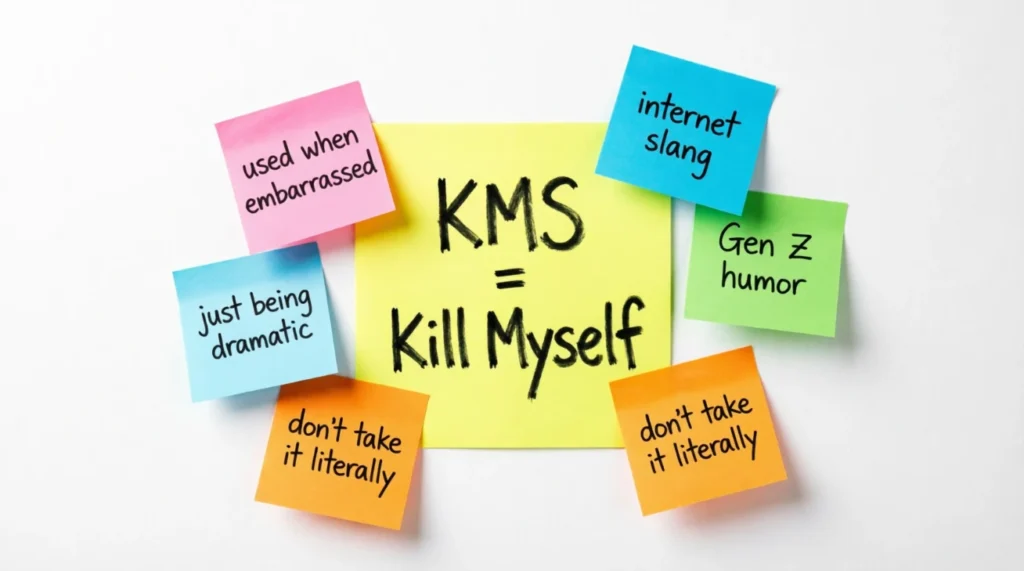
“KMS” shows up in two very different worlds. Getting the context right matters. In texting and gaming, KMS meaning is most often “kill myself.” People almost always use it as an exaggerated expression of frustration or embarrassment, not a literal statement. In tech and cloud computing, “KMS” stands for something completely unrelated: “Key Management Service,” a system for handling encryption keys.
This guide covers both meanings clearly. It explains how to tell them apart and answers common questions people search about the term. The casual slang meaning comes first below. If this topic touches something more personal for you, resources are available at the end of this guide.
What “KMS” Means
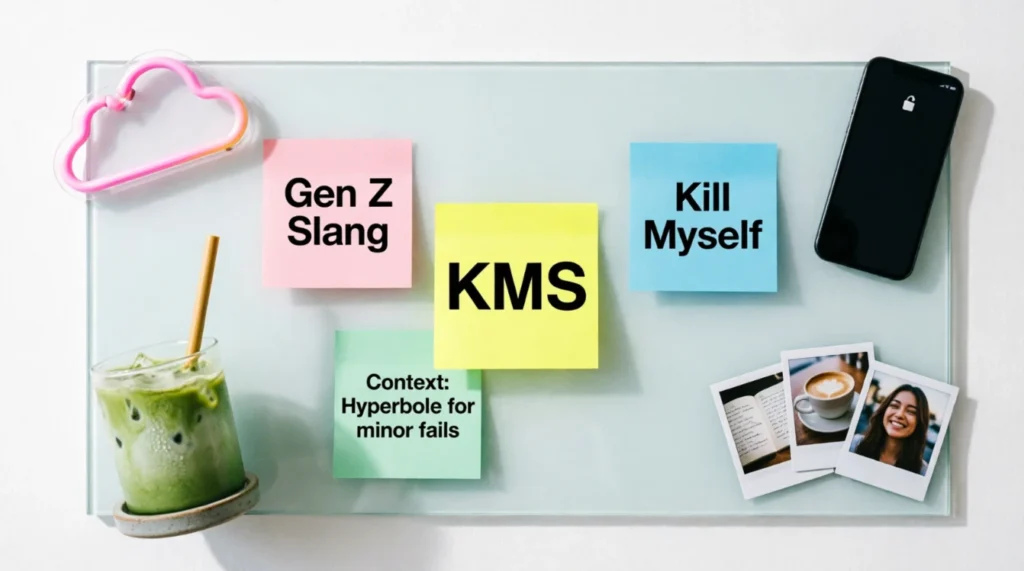
In texting and casual online chat: “KMS” is internet slang for “kill myself.” People overwhelmingly use it hyperbolically. It’s the same way someone might say “I could die” after an embarrassing moment, or “this is killing me” about a stressful task. Most of the time, it signals exaggerated frustration, boredom, secondhand embarrassment, or mock despair, not a literal statement of intent.
That said, the phrase directly references self-harm. It’s worth taking seriously if someone uses it in a way that feels different from casual joking. Watch for other signs of real distress, isolation, or hopelessness alongside it. Context, tone, and the person’s overall situation matter more than the letters themselves.
In technology: “KMS” most commonly stands for “Key Management Service.” This is a system, often cloud-based, used to create, store, and control access to encryption keys that protect sensitive data. AWS Key Management Service is one well-known example. The term can also refer more generally to a “Key Management System” , the broader category of tools and processes for handling cryptographic keys in IT and cybersecurity.
Examples of “KMS” in a Sentence
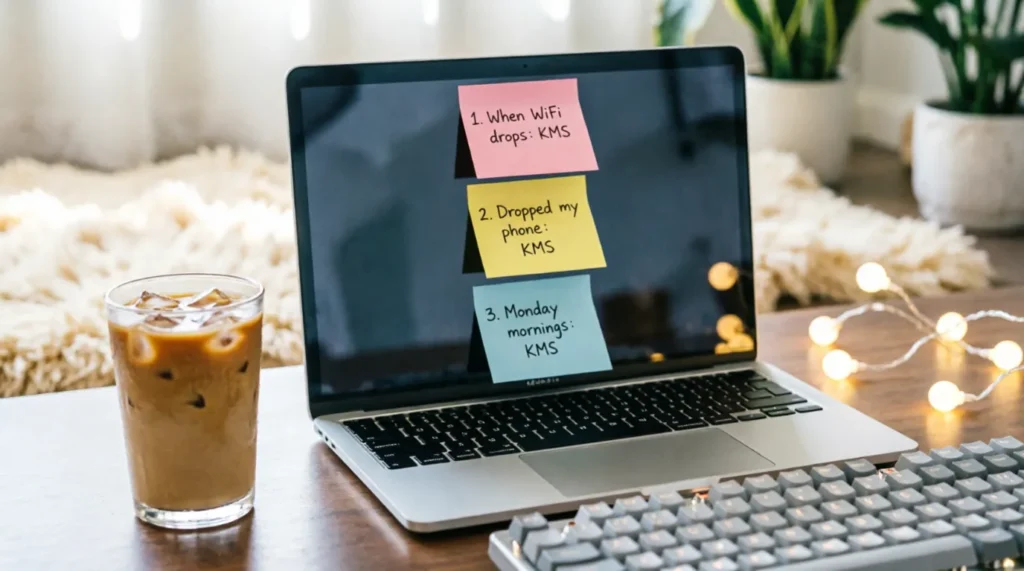
Slang use:
- “I forgot my presentation notes at home, kms.”
- “She tripped in front of the whole class kms, I would’ve died.”
- “This traffic is so bad, kms, I’m going to be late again.”
- “He texted ‘kms‘ after realizing he replied-all to the entire office.”
- “Failed the exam by two points, kms.”
Tech use:
- “The app pulls encryption keys from AWS KMS automatically.”
- “Our security team manages all rotation policies through the KMS.”
- “IT set up KMS activation for every machine on the network.”
- “The audit flagged a misconfigured KMS key policy.”
- “Developers rarely handle raw encryption keys directly, thanks to KMS.”
Different Meanings and Contexts
Casual internet slang (hyperbolic use). In texts, gaming chats, and social media comments, “KMS” usually expresses exaggerated frustration or “this is so bad” energy. It works a lot like “I’m dying” or “this is killing me.”
Technology and cybersecurity. In IT and cloud computing, “KMS” refers to a Key Management Service or Key Management System. This is infrastructure for generating, storing, rotating, and controlling access to encryption keys.
Software licensing. In some enterprise software contexts, “KMS” also refers to “Key Management Service” as used by Microsoft. Microsoft uses this system for activating and licensing software across an organization’s network, a specific, unrelated technical meaning within the Microsoft ecosystem.
Context makes the meaning clear almost every time. In a text or gaming chat, it’s the slang phrase. In an IT meeting or a cloud services dashboard, it refers to key management technology.
How to Use “KMS” Correctly
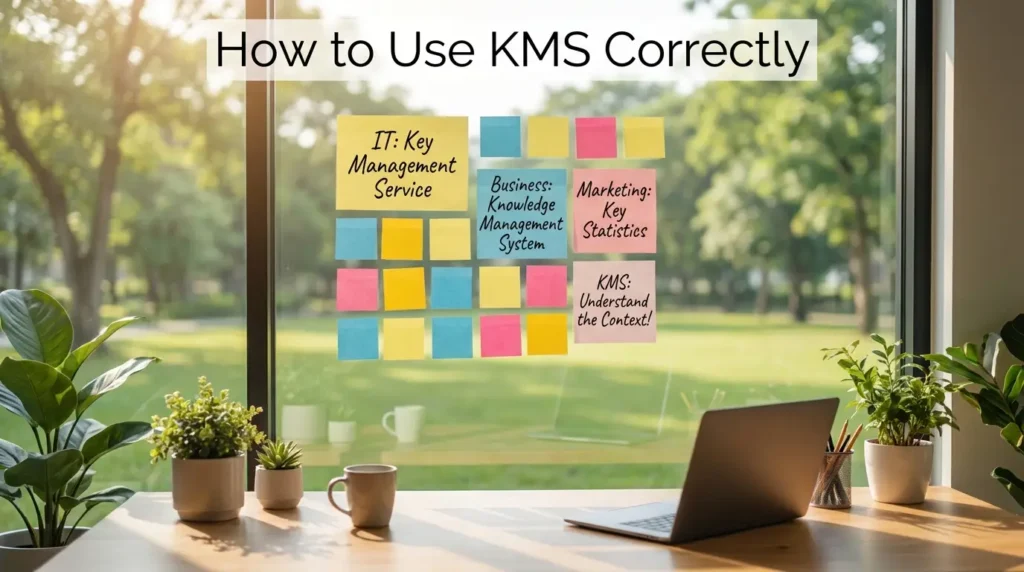
- In casual chat: The phrase touches on self-harm, even in jest. It’s worth being thoughtful about who you’re talking to and how the phrase might land. Not everyone reads exaggerated slang the same way.
- In tech writing: Spell out “Key Management Service” on first use. Then use “KMS” as shorthand afterward, especially in technical documentation where clarity matters.
- Watch the setting. The same three letters mean something completely different in a text message versus a cloud infrastructure meeting. Always check context before assuming which one applies.
Quick Facts
| Fact | Detail |
| Slang meaning | “Kill myself” usually hyperbolic exaggeration of frustration or embarrassment |
| Tech meaning | “Key Management Service” or “Key Management System” |
| Common tech setting | Cloud computing (e.g., AWS KMS), cybersecurity, enterprise software licensing |
| Formality | Slang use is very casual; tech use is standard, formal terminology |
Frequently Asked Questions
What does “KMS” mean in texting?
It’s internet slang for “kill myself.” People almost always use it as an exaggerated expression of frustration, embarrassment, or stress, not a literal statement.
What does “KMS” mean in tech or IT?
It usually stands for “Key Management Service” or “Key Management System.” These refer to tools that manage encryption keys, commonly used in cloud computing and cybersecurity.
Should I be worried if someone sends me “KMS”?
Most of the time, it’s used casually and hyperbolically. But watch for other signs of real distress, hopelessness, withdrawal, or a change in tone. If those show up too, it’s worth checking in on that person directly.
Is “KMS” always about self-harm?
No. Outside of casual slang, it commonly refers to unrelated technology, like AWS’s Key Management Service or Microsoft’s software licensing system.
Key Takeaways
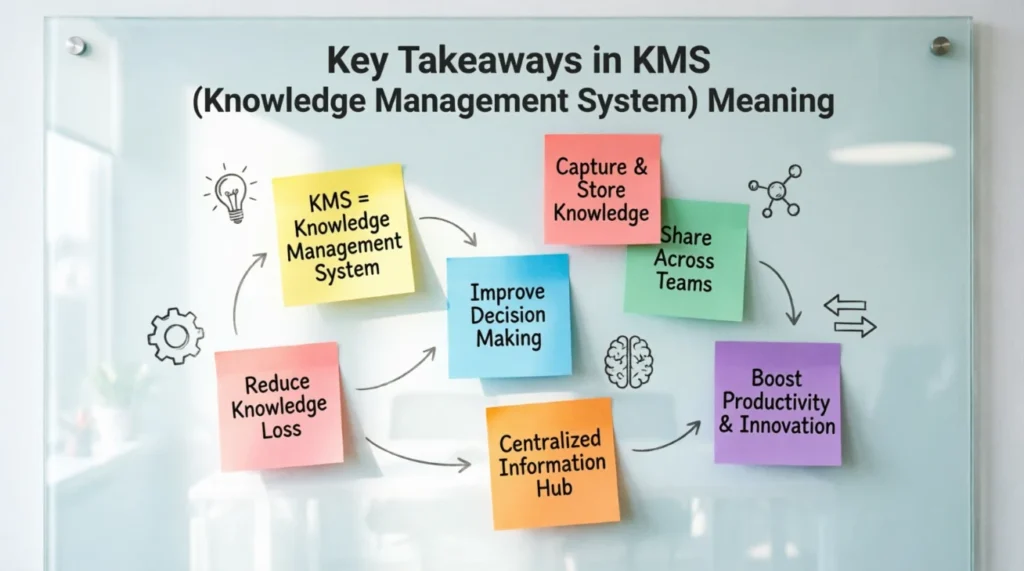
- “KMS” has two very different common meanings: internet slang for “kill myself,” and a technology term for “Key Management Service.”
- The slang use is almost always hyperbolic, but tone and context matter if something feels genuinely concerning.
- In tech, “KMS” refers to systems that manage encryption keys or software licensing.
- The context of a text message versus a technical document makes clear which meaning applies.
Conclusion
“KMS” is a good reminder that three letters can carry two completely unrelated meanings. Getting it right just comes down to reading the room. In a text thread or gaming chat, it’s almost always shorthand for exaggerated frustration in the same family as “I’m dying” or “this is killing me.” In a systems architecture doc or a cloud console, it’s just infrastructure, a way to manage the encryption keys that keep sensitive data secure.
The slang use is worth a little more attention than most casual abbreviations. That’s simply because of what the words literally spell out. Most of the time, it’s harmless exaggeration between friends. But if the tone feels different from the usual joking, take it seriously. A sense that someone truly means it, paired with real hopelessness or withdrawal, is worth responding to directly rather than brushing past.
Next time you see “KMS” pop up, the setting will almost always tell you which meaning applies. If it ever leaves you unsure whether someone’s okay, trust that instinct. Checking in is always the right call.

I am Olivia Brooks an American editor and content researcher dedicated to creating clear, accurate content. At writemora.com, I help readers to understand words, phrases, and modern language with confidence.