
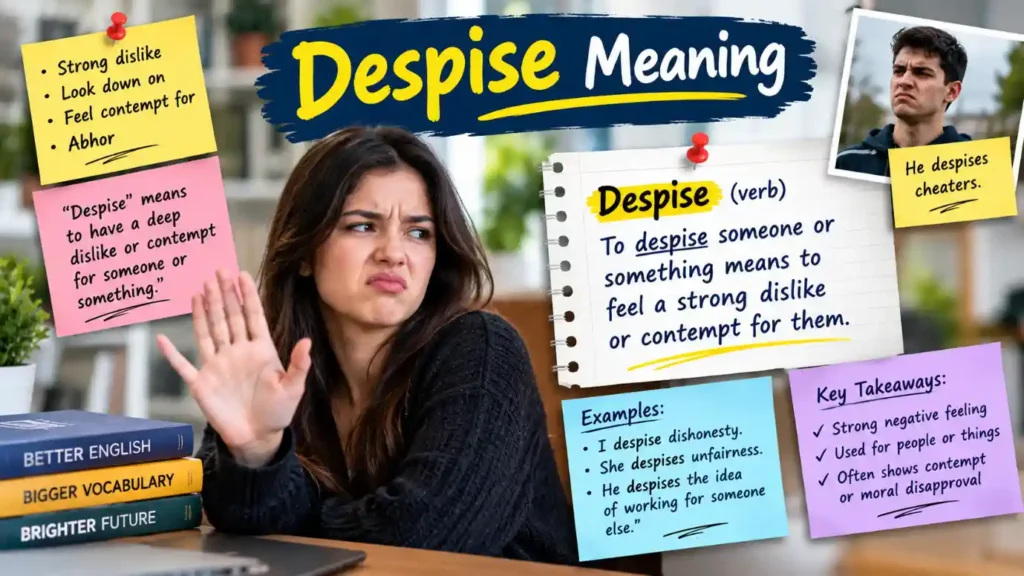
Despise means to feel a strong feeling of dislike or contempt toward someone or something, often combined with a sense of looking down on them. It is stronger than simply disliking something: when you despise a person, habit, or idea, you consider it worthless, low, or unworthy of respect.
This guide covers what despise means, where the word comes from, how it is used in different contexts, and the mistakes people commonly make with it.
What It Means
In simple terms, despise means to hate something so deeply that you also look down on it. It carries two feelings at once: dislike and contempt. You do not just dislike the thing; you feel it is beneath you.
To despise a person, for example, means you have no respect for them and consider them morally low or worthless. To despise a habit like lying means you regard it as shameful and unworthy. The word always points downward: the person who despises places themselves above whatever they despise.
It is worth noting that despise describes a settled attitude, not a passing mood. Someone who despises corruption does not just feel annoyed by it today; they hold a firm, lasting contempt for it.
Origin & History
Despise comes from the Latin word “despicere,” which combines “de-“ (down) and “specere” (to look). Literally, it meant “to look down on” someone or something. That image of looking downward in scorn has stayed with the word for its entire history.
The word entered English through Old French in the 13th century, in forms like “despis-,” carrying the meaning of scorning or holding in contempt. English speakers have used “despise” in essentially the same strong sense ever since, applying it to people, actions, and ideas considered low or shameful.
Over time, despise became especially common in moral and literary language. Writers use it to express moral judgment: characters despise cruelty, despise cowardice, or despise betrayal. In everyday speech it appears in strong statements like “I despise cheating” or “She despises arrogance.”
Different Contexts and Meanings

Despising a person. This is the most common use. To despise someone means to feel contempt for them, usually because of their character or actions. For example, people may despise a corrupt official or despise someone who betrayed their trust.
Despising an idea or habit. The word also applies to things rather than people: despising dishonesty, despising laziness, despising unfairness. Here it expresses strong moral disapproval.
Despising oneself. In psychology and everyday speech, people sometimes say they despise themselves, meaning they feel deep shame or self-contempt, often after doing something they regret.
Examples
“She despises people who lie to get ahead.”
“He despised the corruption he saw in the system.”
“They despise cheating in every form.”
“I have always despised cruelty toward animals.”
“She could not hide the fact that she despised him.”
“He despises being told what to do.”
“The community despised the man after the scandal.”
“She despises herself for what she said that night.”
“Writers of that era openly despised censorship.”
“He despises shortcuts and insists on doing things properly.”
How to Use It (Grammar and Context)
Despise is a regular transitive verb, which means it always takes an object: you despise *someone* or *something*. You cannot simply “despise” without saying what you despise. Its forms are straightforward: despise, despises, despised, despising. Example: “She despises arrogance.” / “He despised the decision.” / “They are despising no one; they simply disagree.”
The word is almost always stronger than the situation needs in casual speech, so it works best where strong feeling is genuinely intended. Saying “I despise Mondays” is understood as humor or exaggeration, while “I despise dishonesty” reads as a serious moral statement.
Related forms include the adjective “despicable,” which describes something worthy of being despised (“a despicable act”), and the noun “despisal,” a rare formal word for the act of despising. Do not confuse “despise” with “despite,” a preposition meaning “in spite of”: they look similar but mean completely different things.
Common Mistakes
Using despise when “dislike” would do. Despise is one of the strongest negative words in English. Using it for mild annoyances, like disliking a food or a song, sounds exaggerated and weakens the word.
Confusing despise with despite. Despite is a preposition meaning “in spite of” (“despite the rain”), while despise is a verb meaning “to look down on with contempt.” Mixing them up is a common spelling error.
Thinking despise means only hate. Hate is about strong dislike; despise adds contempt and a sense of superiority. You can hate an enemy you respect, but you cannot despise someone you respect. The contempt is the key difference.
Using it without an object. Because despise is transitive, a sentence like “He despises” is incomplete. Always name what is despised: “He despises hypocrisy.”
Similar Words
| Word | Meaning | Difference from Despise |
| Hate | To feel intense dislike toward someone or something | Hate is strong dislike; despise adds contempt and looking down on the target |
| Loathe | To hate something deeply, often with disgust | Loathe stresses disgust and revulsion; despise stresses contempt and scorn |
| Detest | To dislike intensely | Detest is close in strength but more formal and less about superiority |
| Scorn | To feel or express contempt | Scorn can be a noun or verb and often describes the expression of contempt rather than the feeling |
| Abhor | To hate or detest utterly | Abhor is the most formal and literary of the group, often used for moral evils |
Opposite Words
| Word | Meaning | Why It’s an Opposite |
| Admire | To regard with respect and approval | Directly opposes the contempt at the heart of despise |
| Respect | To hold in high regard | Despise means looking down; respect means looking up |
| Love | To feel deep affection | The strongest positive feeling against one of the strongest negative ones |
| Esteem | To value highly | Esteem treats something as worthy; despise treats it as worthless |
Pronunciation
Despise is pronounced dih-SPYZ, with the stress on the second syllable. The final “s” sounds like a “z.”
Quick Facts
| Fact | Detail |
| Word origin | Latin “despicere” (de- “down” + specere “to look”), via Old French |
| Part of speech | Transitive verb (despise, despises, despised, despising) |
| Common phrases | Despise someone, despise dishonesty, despise oneself |
| Key distinction | Despise means contempt plus dislike, not just strong dislike |
| Common confusion | “Despise” vs “despite” (verb vs preposition) |
| Related words | Despicable (adjective), despisal (noun, rare) |
Key Takeaways
- Despise means to feel contempt and strong dislike, with a sense of looking down on the target.
- The word comes from the Latin “despicere,” literally “to look down on.”
- It is stronger than hate or dislike because it includes scorn, not just aversion.
- Common uses include despising a person, an idea, a habit, or even oneself.
- Do not confuse “despise” with “despite”; they are different words entirely.
FAQs
What does it mean if someone despises you?
It means they feel contempt for you and look down on you, usually because of something about your character or actions.
What is the difference between despise and hate?
Hate is intense dislike. Despise is dislike plus contempt: the person who despises also considers the target low or worthless.
Is despise stronger than dislike?
Yes, much stronger. Dislike is mild; despise is one of the strongest negative words in English.
What does “despise” mean in simple words?
It means to look down on someone or something with strong dislike and no respect.
What is the opposite of despise?
Admire and respect are the closest opposites, since despise is built on contempt.
Can you despise yourself?
Yes. People say they despise themselves when they feel deep shame or self-contempt, often after doing something they regret.
What is the difference between despise and despite?
Despise is a verb meaning to scorn or look down on. Despite is a preposition meaning “in spite of.” They only look similar.
Is “despicable” related to “despise”?
Yes. Despicable is the adjective form, describing something worthy of being despised, like “a despicable lie.”
Why do people say “I despise” instead of “I hate”?
Despise adds a tone of moral judgment and superiority that hate does not carry, so people choose it when they want to express scorn, not just anger.
Conclusion
The despise meaning centers on one idea: strong dislike mixed with contempt, the feeling of looking down on someone or something as low or worthless. From its Latin root meaning “to look down,” the word has carried that downward gaze through centuries of English.
That extra layer of scorn separates despise from its neighbors: hate can be passionate, but despise always places the despiser above and the despised below. If you use the word, use it deliberately, and it will keep the weight that makes it one of the most powerful verbs in the language.

I am Stephen King an American author known for compelling storytelling. At writemora.com, we value clear, accurate, and reader-focused content inspired by excellence in writing.