
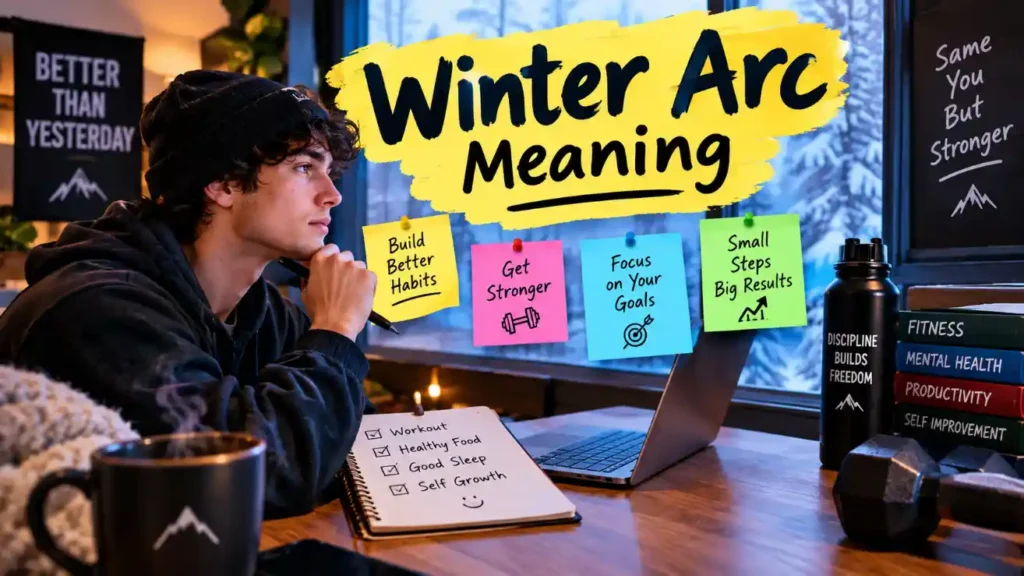
A winter arc describes a period of intense personal transformation and self-improvement that someone deliberately undertakes during the fall and winter months, typically running from around October through February. The idea borrows “arc” from storytelling, framing the colder, quieter months as a character-development chapter in someone’s own life.
The concept spread rapidly across TikTok and other social platforms, giving people a structured, motivating way to reframe a season often associated with low energy and hibernation. Understanding the winter arc meaning explains both the trend’s appeal and the specific mindset behind it.
This guide covers what a winter arc actually involves, where the term came from, how people structure their own, and the mistakes people commonly make when trying one.
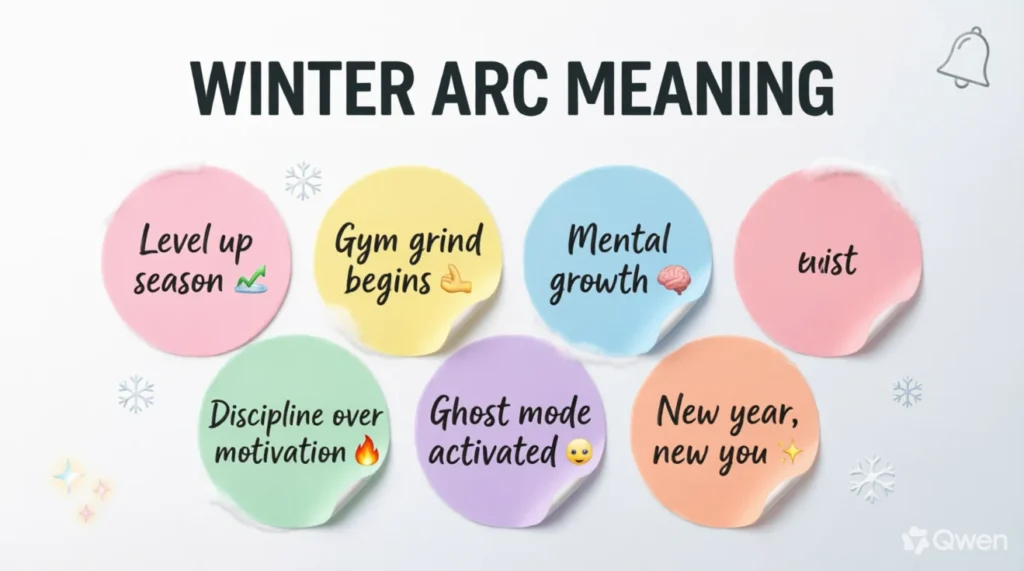
What It Means
In simple terms, a winter arc refers to a self-directed period of focused self-improvement during the colder months, typically covering habits like fitness, discipline, career or academic goals, mental health routines, or personal appearance. People often treat it as a personal reset, using the season’s naturally slower pace and reduced social distractions to build new habits.
In a fuller sense, the term borrows deliberately from fiction and character development, where a “story arc” describes a character’s transformation across a chapter or season of a show. Applying that framing to real life implies intentionality: rather than passively waiting out winter, someone treats the season as a defined chapter with a clear beginning, a specific focus, and an intended transformation by the end.
Winter arcs vary widely in specific content; some focus heavily on fitness and physical transformation, others on career growth, studying, mental health, or general discipline but they share the same underlying structure of using winter as a dedicated growth period.
Origin & History

The phrase “winter arc” spread primarily through TikTok starting around 2022 and 2023, building on existing internet culture around glow-ups, self-improvement challenges, and seasonal reset trends that had circulated in various forms for years before the specific “arc” terminology caught on.
The storytelling framing likely drew inspiration from anime and other serialized fiction, where fans commonly use “arc” to describe a defined segment of a story focused on a character’s growth or a specific plotline. Applying that same vocabulary to real life gave the self-improvement concept a narrative, almost cinematic framing that resonated strongly with younger social media users already fluent in that storytelling language.
As the trend grew, it picked up variations and related terms, including “hot girl winter” reframed toward productivity rather than just fun, and eventually expanded into a broader seasonal framework, with some users now also referencing “summer arcs” or other seasonal versions of the same basic concept.
Different Contexts and Meanings
As a fitness and physical transformation goal. Many winter arcs center specifically on exercise, diet, and physical appearance, using the colder months (when people socialize less) as a low-distraction period to build consistent gym habits.
As an academic or career-focused push. Students and professionals sometimes frame a winter arc around studying, skill-building, or career goals, treating the season as a focused period to catch up or get ahead before spring.
As a mental health and discipline reset. Some people use the term more broadly, focusing on habits like better sleep, reduced screen time, journaling, or general self-discipline rather than purely physical goals.
As a social media documentation trend. Many people publicly document their winter arc online, posting progress updates, habit trackers, or before-and-after content, turning the personal goal into a shared, community-driven challenge.
As a broader seasonal life-framing concept. Beyond winter specifically, the “arc” framing has expanded to other seasons and life periods, treating personal growth as something structured into defined chapters rather than an ongoing, undefined process.
Examples
- “She started her winter arc with a strict gym schedule and no going out on weeknights.”
- “His winter arc focused entirely on finishing his certification before spring.”
- “The whole friend group decided to do a winter arc together for accountability.”
- “She posted daily updates documenting her winter arc progress online.”
- “His winter arc included cutting back on social media and reading more.”
- “By the end of her winter arc, she’d built a consistent morning routine.”
- “He joked that his winter arc mostly involved finally cleaning his apartment.”
- “The trend encouraged people to treat winter as a growth chapter, not just a season to get through.”
- “Her winter arc combined fitness goals with saving money for a spring trip.”
- “They compared winter arc progress photos at the start of March.”
How to Use It (Grammar and Context)
Winter arc functions as a noun phrase, typically paired with possessive language: “my winter arc,” “his winter arc,” or as part of a verb phrase like “doing a winter arc” or “starting a winter arc.” People often specify the particular focus alongside the phrase, as in “a fitness winter arc” or “a career winter arc.”
The term stays firmly casual and belongs to social media and everyday conversation rather than formal writing, given its clear roots in internet trend culture.
Common Mistakes
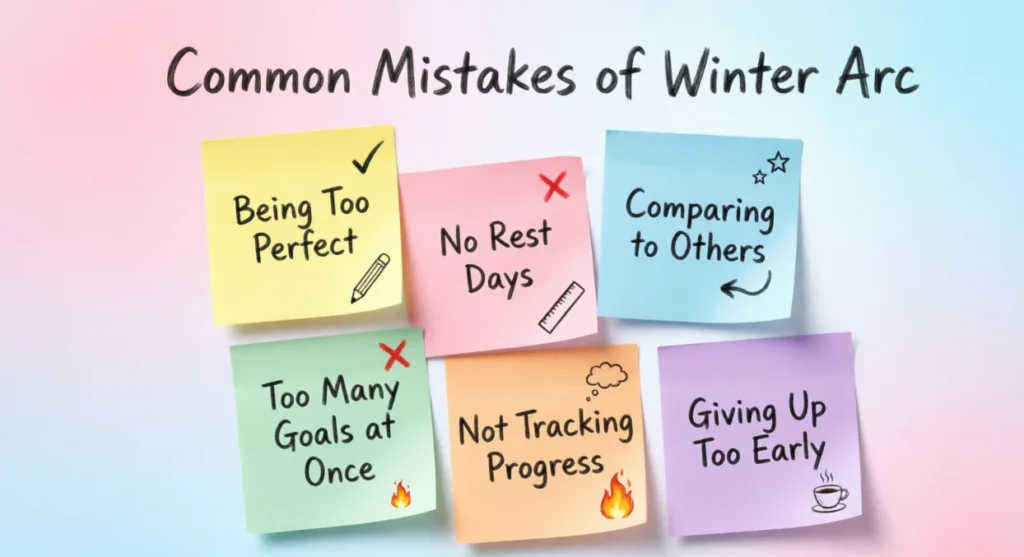
Assuming a winter arc requires extreme or unsustainable goals. While some people set intense fitness or productivity targets, a winter arc can just as easily involve modest, sustainable habit changes rather than a drastic overhaul.
Treating it as strictly about physical appearance. While fitness-focused winter arcs are common and highly visible on social media, plenty of people apply the concept to career, academic, or mental health goals instead.
Giving up entirely after missing a day or goal. Because the trend borrows a narrative “arc” framing, some people treat any setback as ending the arc entirely, when consistency over the whole season matters more than any single day.
Assuming the trend only applies to young people on social media. While the specific terminology emerged from youth-driven platforms like TikTok, the underlying idea of using a quieter season for personal growth applies to anyone, regardless of age or platform use.
Similar Words
| Word/Phrase | Meaning | Difference from Winter Arc |
| Glow-up | A noticeable positive transformation, often physical or in confidence | Glow-up describes the result; winter arc describes the specific seasonal period and process leading to it |
| New Year’s resolution | A goal set at the start of a new year, often for self-improvement | Resolutions typically start January 1st with a full-year scope; winter arcs often start earlier, in fall, with a narrower seasonal focus |
| Hot girl summer | A slang phrase promoting confidence and enjoyment during summer months | Hot girl summer emphasizes fun and self-assurance; winter arc emphasizes discipline and structured self-improvement |
| Self-improvement challenge | Any structured personal growth effort with defined goals | Winter arc specifically ties that effort to the winter season and borrows storytelling “arc” language |
Opposite Words
| Word/Phrase | Meaning | Why It’s an Opposite |
| Hibernation mode | Passively resting or disengaging during winter without specific goals | Directly contrasts with the intentional, growth-focused approach of a winter arc |
| Coasting | Continuing without particular effort or new goals | Opposes the deliberate, structured self-improvement central to a winter arc |
| Winding down | Reducing activity or ambition, often at year’s end | Contrasts with the winter arc’s framing of winter as a period of increased focus and effort |
Pronunciation
Winter arc is pronounced WIN-ter ARK, with standard stress on the first syllable of each word.
Quick Facts
| Fact | Detail |
| Core meaning | A self-directed period of personal growth during fall and winter |
| Typical timeframe | Roughly October through February |
| Popularized on | TikTok, starting around 2022–2023 |
| Common focus areas | Fitness, career, academics, mental health, general discipline |
| Related terms | Glow-up, hot girl summer, self-improvement challenge |
| Related trend expansion | Some now reference “summer arcs” or other seasonal versions |
FAQs
What does winter arc mean?
A winter arc refers to a self-directed period of focused personal improvement during the fall and winter months, often centered on fitness, career, academics, or general discipline.
Is winter arc bulking or cutting?
A winter arc can involve either bulking or cutting, depending on your fitness goals. The focus is usually on consistent training, nutrition, and self-improvement.
How long does a winter arc usually last?
A winter arc commonly runs for about 90 days, often from October through December or into early January.
What is a Guys winter arc?
A guy’s winter arc is a self-improvement challenge where he focuses on fitness, discipline, appearance, productivity, and personal growth during the colder months.
Can a winter arc be positive?
Yes. A winter arc can encourage healthy habits, consistency, confidence, exercise, better sleep, and personal development when approached realistically.
What is the 3-3-3 rule gym?
The 3-3-3 rule can refer to different gym routines, but it commonly means 3 exercises, 3 sets, and 3 reps. Its meaning can vary depending on the fitness creator using it.
Is winter arc only for the gym?
No. A winter arc can include studying, working, reading, healthy eating, sleep, skincare, productivity, and other habits, not just exercise.
How do I start my winter arc?
Choose a few realistic goals, create a daily routine, track your progress, and stay consistent with exercise, nutrition, sleep, and personal development.
What are the rules for the Winter Arc?
There are no official universal rules. Common goals include regular workouts, healthy eating, good sleep, reduced distractions, productivity, and staying consistent.
How much time is left for the Winter Arc?
If you mean the popular October-to-December Winter Arc, it has not started yet as of September 11, 2026. It typically begins around October 1.
Key Takeaways
- A winter arc describes a self-directed period of personal growth and habit-building during fall and winter.
- The trend spread primarily through TikTok starting around 2022–2023.
- It borrows “arc” language from storytelling to frame the season as a defined growth chapter.
- Common focus areas include fitness, career, academics, and general discipline, not just physical appearance.
- The concept has expanded into related seasonal trends, including “summer arcs.”
Conclusion
The winter arc meaning reframes a season many people dread into something with purpose and momentum, borrowing the language of storytelling to turn a few quiet months into a defined chapter of growth. That shift in framing does real psychological work: a season feels a lot more motivating when you think of it as your own personal character arc rather than just time to get through until spring.
Part of why the trend caught on so widely is how flexible it actually is underneath the catchy name. Someone’s winter arc might mean four gym sessions a week and a strict diet, while someone else’s might just mean finally sticking to a consistent bedtime and reading more before bed both count, because the structure matters more than the specific content inside it.
If you’re deep into a fitness-focused version or just using the colder months to build one small, sustainable habit, calling it a winter arc gives the effort a shape and an ending point, which for a lot of people turns out to be exactly the motivation they needed to actually follow through.

I am Stephen King an American author known for compelling storytelling. At writemora.com, we value clear, accurate, and reader-focused content inspired by excellence in writing.