
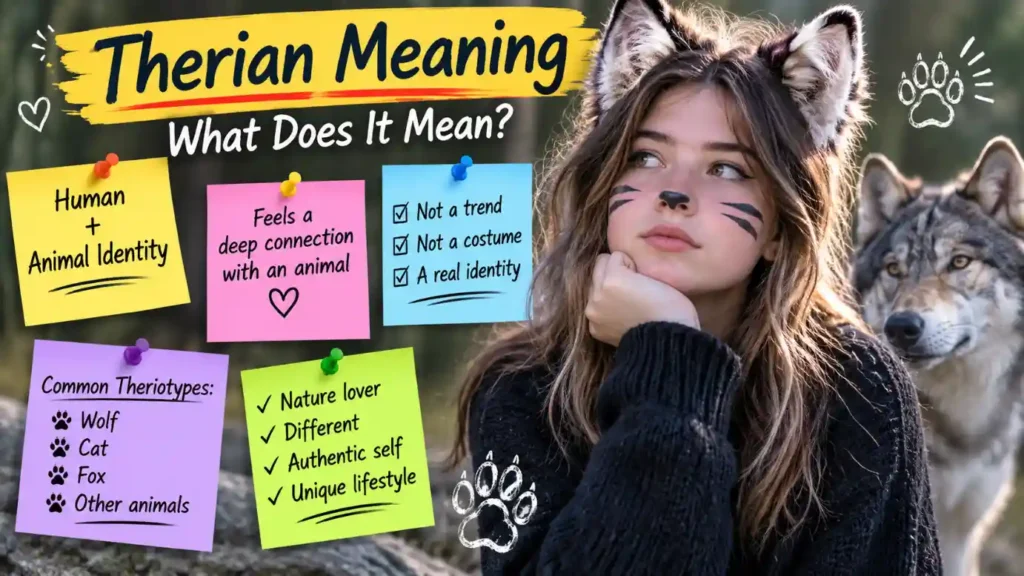
A therian is someone who identifies, on a psychological or spiritual level, as partly or wholly a non-human animal. The identity centers on an internal sense of connection to a specific animal rather than any physical transformation, costume, or performance.
The term comes from an online community that formed in the 1990s, and it still carries a lot of confusion and misinformation outside that community. Understanding the therian meaning helps clear up what the identity actually involves, and just as importantly, what it doesn’t.
This guide covers what therian means, where the term and community came from, how the identity works in practice, and how it differs from related terms people often mix it up with.
What It Means
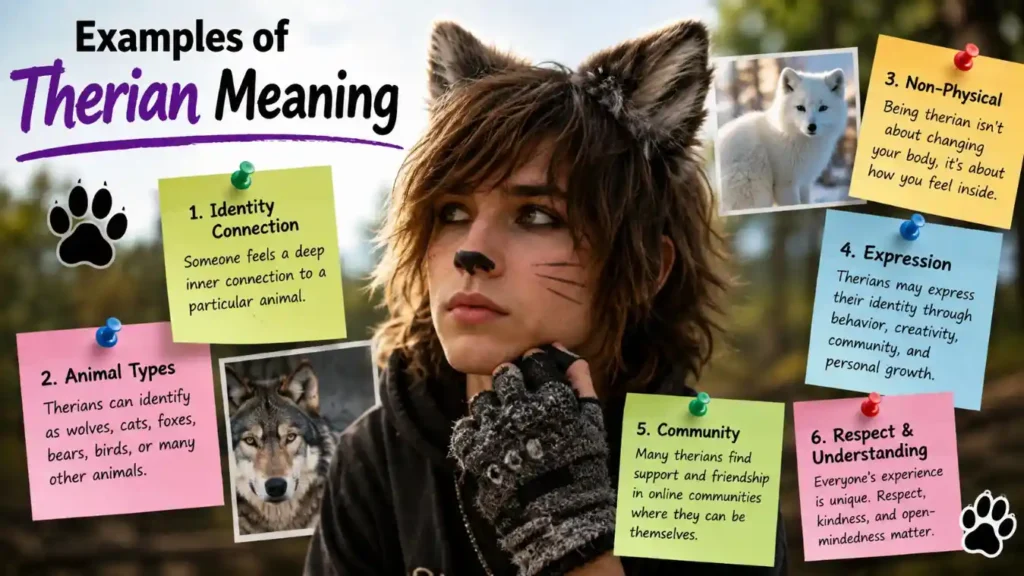
In simple terms, a therian identifies internally as a non-human animal, in whole or in part, alongside their human identity. This isn’t a costume, a hobby, or a performance therians describe as a deep, persistent sense of self that exists separately from any outward behavior.
In a fuller sense, therianthropy (the broader concept the term comes from) centers on the belief or feeling that part of one’s identity is non-human. Therians typically identify with one specific animal, called their “theriotype,” which might be a real species like a wolf or fox, though some identify with extinct or fantastical creatures instead.
Therians generally describe this identity as something they discover rather than choose, often tracing it back to childhood feelings of disconnect from being human, vivid or recurring dreams involving their theriotype, or a strong, unexplained pull toward a particular animal.
Origin & History
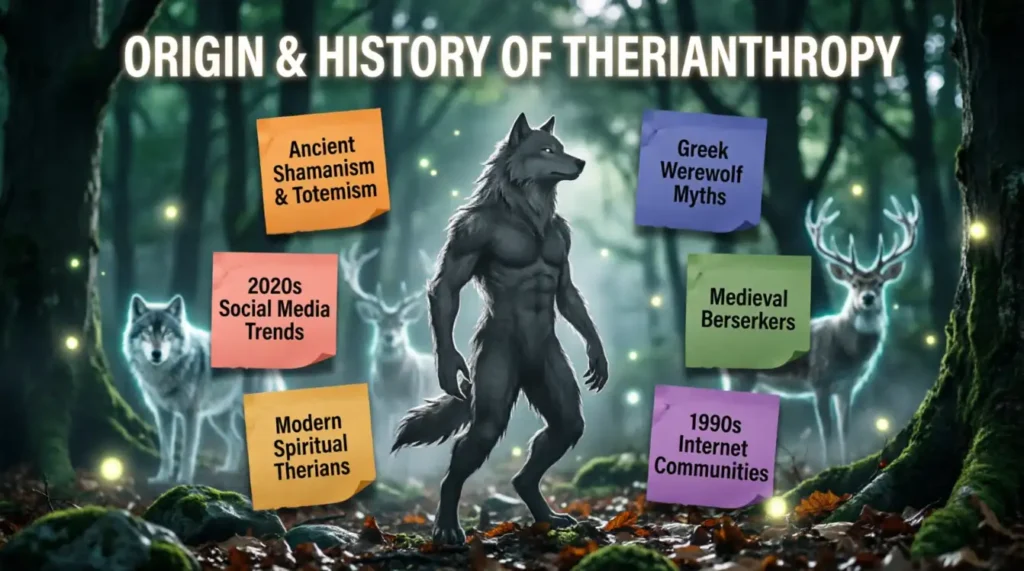
The therian community formed online in the mid-1990s, growing out of early internet mailing lists and newsgroups where people who felt a non-human identity found each other and started comparing experiences. The community deliberately separated itself from werewolf fiction and lycanthropy folklore, even though the words sound related, because members wanted language that reflected genuine identity rather than myth or horror-genre tropes.
As internet forums, LiveJournal communities, and later social media platforms grew through the 2000s and 2010s, the therian community expanded and built its own shared vocabulary, coining terms like “theriotype,” “shift” (a felt sense of connecting more strongly with one’s animal side), and “kin” (a related but distinct identity, more common among people who identify with fictional characters or species).
The term itself borrows from the Greek word “therion,” meaning “wild animal,“ and combines it with “-anthropy,” referencing human form reflecting the identity’s focus on a blend of human and animal selfhood rather than literal transformation.
Different Contexts and Meanings
As a personal identity. At its core, therian describes an individual’s internal sense of self, separate from any outward presentation, costume, or performance.
Within online communities. Therian forums, Discord servers, and social media spaces give people places to discuss their theriotypes, compare experiences, and offer each other support.
In relation to “shifting.” Many therians describe experiencing “shifts” periods where they feel a stronger mental or emotional connection to their theriotype, sometimes affecting posture, mannerisms, or mindset, though never a literal physical change.
As distinct from furries. People frequently confuse therians with furries, but the two describe different things. Furry fandom centers on an interest in anthropomorphic animal characters and often involves costumes, art, and fandom activities; therianthropy centers on personal identity rather than fandom or creative interest.
As distinct from otherkin. Otherkin names a related but broader identity, where someone identifies as a non-human being that isn’t necessarily an animal or a mythological creature, for instance. Therian specifically refers to identifying with an animal, typically one that exists or has existed on Earth.
Examples
- “She identifies as a therian and has felt a connection to wolves since childhood.”
- “He described a ‘shift’ where he felt more aligned with his fox theriotype.“
- “The therian community on that forum shares dream journals about their theriotypes.”
- “Not all therians identify with real animals; some have prehistoric theriotypes.”
- “People sometimes confuse their identity with furry fandom, but they’re different things.”
- “Her theriotype is a red fox, something she’s felt connected to for years.”
- “The Discord server exists specifically for therians to discuss their experiences.”
- “He clarified that being a therian isn’t about costumes or performance.”
- “The term therianthropy combines Greek roots meaning ‘wild animal’ and ‘human form.'”
- “She said her therian identity has nothing to do with believing she can physically transform.”
How to Use It (Grammar and Context)
Therian functions as both a noun and an adjective. As a noun, it names the person: “She’s a therian.” As an adjective, it describes something related to the identity: “a therian community,” “a therian identity.”
The related noun “theriotype” names the specific animal a therian identifies with, while “therianthropy” describes the broader concept or phenomenon itself. Community members typically use these terms precisely, since the vocabulary carries specific, agreed-upon meanings within the community.
Common Mistakes
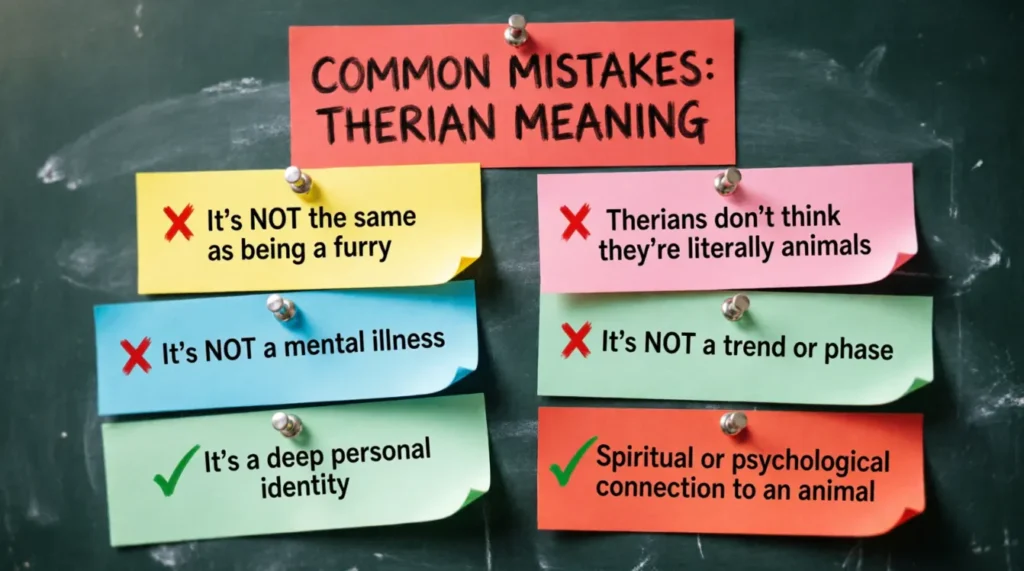
Confusing it with mental illness. Therians themselves generally describe the identity as separate from any clinical condition, and most in the community distinguish it clearly from clinical species dysphoria or dissociative conditions, though the two can occasionally overlap for some individuals.
Assuming it involves believing in literal physical transformation. Therians don’t claim to physically become animals. The identity centers on internal, psychological, or spiritual experience, not literal shapeshifting.
Mixing it up with furry fandom. As noted above, furries engage with anthropomorphic animal characters as a fandom and creative interest; therians describe a personal identity, and the two overlap for some individuals but remain conceptually distinct.
Treating it as a fictional trend rather than a genuine identity community. While outsiders often misunderstand or mock the identity online, the therian community has existed continuously since the 1990s, with its own internal history, vocabulary, and shared experiences.
Similar Words
| Word | Meaning | Difference from Therian |
| Otherkin | Someone who identifies as a non-human being, not necessarily an animal | Otherkin covers a broader range of identities, including mythological or fictional beings; therian specifically means animal identity |
| Furry | Someone interested in anthropomorphic animal characters, often through art, costumes, or fandom | Furry describes a fandom and creative interest; therian describes a personal identity |
| Lycanthrope | A folkloric or fictional person who transforms into a wolf | Lycanthropy refers to myth and fiction involving physical transformation; therianthropy refers to a real, internal identity with no claimed physical change |
| Theriotype | The specific animal a therian identifies with | Theriotype names the animal itself; therian names the person who holds that identity |
Opposite Words
| Word | Meaning | Why It’s an Opposite |
| Purely human identity | Identifying entirely and only as human, with no non-human self-concept | The direct opposite of the core therian experience |
| Costume-based roleplay | Adopting an animal persona temporarily, for performance or fun | Contrasts with therian identity’s emphasis on a persistent, internal sense of self rather than temporary performance |
Pronunciation
People pronounce therian as THEER-ee-un, stressing the first syllable.
Quick Facts
| Fact | Detail |
| Word origin | From Greek “therion” (wild animal) and “-anthropy” (human form) |
| Community origin | Formed online in the mid-1990s |
| Core concept | Internal identification as a non-human animal, not physical transformation |
| Related term | Theriotype (the specific animal identified with) |
| Related but distinct identity | Otherkin, furry |
| Common experience | “Shifting,” a felt sense of stronger connection to one’s theriotype |
FAQs
What does therian mean simply?
A therian is someone who identifies, on a psychological or spiritual level, as partly or wholly a non-human animal, without claiming any literal physical transformation.
Is therian the same as furry?
No. Furry fandom centers on an interest in anthropomorphic animal characters, often through art and costumes, while therian describes a personal identity rather than a fandom interest, though some people identify as both.
Do therians believe they can physically turn into animals?
No. The identity centers on internal, psychological experience, not literal shapeshifting or physical transformation.
What is a theriotype?
A theriotype names the specific animal a therian identifies with, which can be a real species or, less commonly, an extinct or fictional creature.
What does “shifting” mean for a therian?
Shifting describes a felt sense of stronger mental, emotional, or behavioral connection to one’s theriotype during certain moments, without any physical change.
Is being a therian considered a mental illness?
Most therians and community members describe the identity as distinct from any clinical condition, though the topic can intersect with mental health discussions for some individuals.
How is otherkin different from therian?
Otherkin forms a broader category that includes non-animal identities, like mythological beings, while therian specifically refers to identifying with an animal.
Where did the therian community start?
It formed online in the mid-1990s, growing out of early internet forums and mailing lists where people with similar experiences found each other.
Key Takeaways
- Therian describes someone who identifies internally as a non-human animal, without claiming physical transformation.
- The identity centers on personal experience, not costume, performance, or fandom activity.
- The therian community formed online in the mid-1990s and built its own established vocabulary.
- Therian differs from furry (a fandom) and otherkin (a broader, non-animal-specific identity).
- Common terms include “theriotype” (the specific animal) and “shifting” (a felt connection to that animal).
Conclusion
The therian meaning centers on identity rather than performance: a genuine, internal sense of connection to a non-human animal that exists alongside a person’s human identity. Understanding that distinction clears up most of the confusion people run into online, where the term often gets mixed up with fandom, folklore, or misunderstood entirely.
The community itself has existed quietly for decades, building its own vocabulary and shared experiences long before most outsiders ever encountered the word. That history matters, because it separates therianthropy from a passing internet trend and situates it as something people have described consistently, in similar terms, since the earliest days of online forums.
If you come across the term again, if in a forum post, a social media bio, or a casual conversation, you’ll now recognize it for what it actually describes: an identity, not a costume, and a community with real history behind it.

I am Stephen King an American author known for compelling storytelling. At writemora.com, we value clear, accurate, and reader-focused content inspired by excellence in writing.