
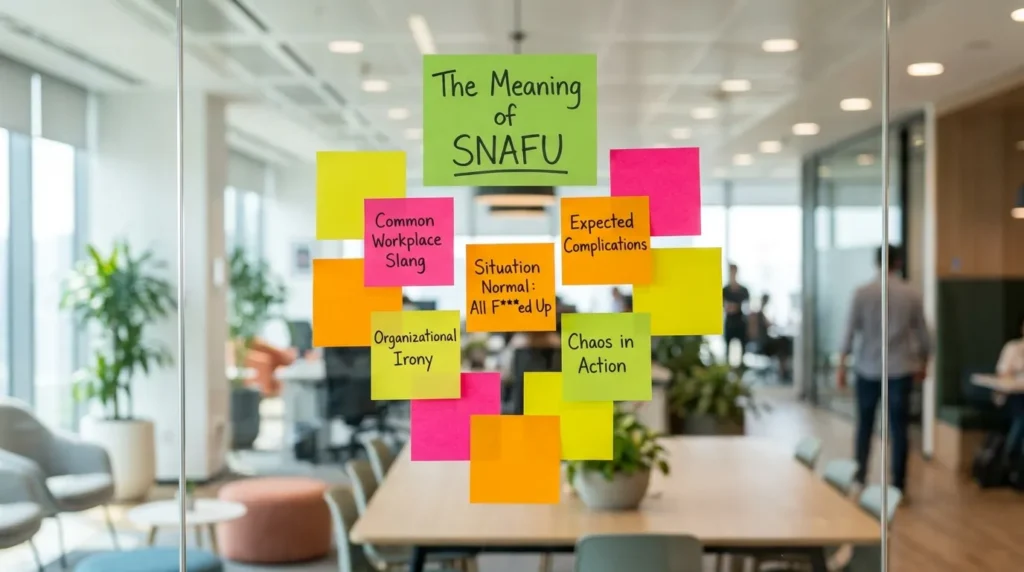
A canceled flight, a scheduling mix-up, a project that goes sideways for no clear reason, people reach for “snafu” to describe exactly that kind of chaotic, frustrating mess. The snafu meaning covers any situation that’s gone wrong in a confusing, disorganized way, especially when the chaos feels almost expected rather than shocking.
This guide covers what “snafu” means, the military acronym it grew out of, how people use the word today, and answers to the questions people ask most often. By the end, you’ll know exactly how to use “snafu” naturally and understand where this now-everyday word actually came from.
What “Snafu” Means
The simple version: A snafu is a confusing, chaotic mess of a situation that’s gone wrong, often due to disorganization, miscommunication, or bad luck rather than any single dramatic disaster.
The fuller picture: “Snafu” works as both a noun and, less commonly, a verb or adjective. As a noun, it describes the messy situation itself (“a scheduling snafu”). The word carries a specific tone: it usually implies the chaos feels routine, almost expected, rather than catastrophic. People use “snafu” for everything from a minor paperwork mix-up to a much bigger organizational breakdown, but the word rarely describes true tragedy; it fits situations that are frustrating and disorganized rather than genuinely devastating.
What makes “snafu” distinctive among English words for chaos is its origin: it started life as a military acronym, not a word coined the normal way.
Origin and History
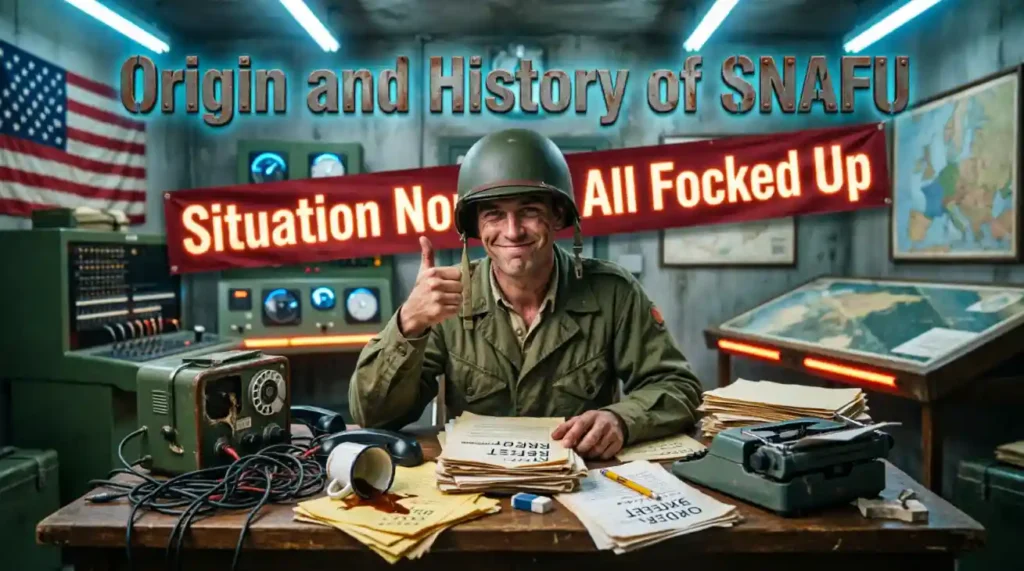
“Snafu” began as military slang, most commonly traced to U.S. armed forces slang from around the World War II era. It stands for “Situation Normal: All Fouled Up” a phrase that captured a specific kind of dark, exhausted humor common among soldiers: chaos and disorganization weren’t the exception in military life, they were simply the normal state of things.
The word “fouled” in that expansion works as a cleaned-up substitute. In its original military usage, soldiers commonly used a cruder, more vulgar word in that spot instead of “fouled,” reflecting the blunt, informal slang typical of wartime military speech. Over time, as the term spread into civilian and mainstream use, the softened “fouled up” version became the standard, publishable form of the acronym.
“Snafu” quickly moved beyond strictly military contexts after the war, entering everyday English as a general word for any messy, disorganized situation. Its clever structure, a real-sounding word built entirely from an acronym, helped it stick in the language long after most people forgot, or never knew, what the letters originally stood for.
Different Meanings and Contexts
General everyday use (most common). In modern English, “snafu” simply means a confusing mishap or mess-up, with no military connection required or implied. People use it for scheduling conflicts, technical glitches, paperwork errors, and countless other everyday mix-ups.
Military and historical use. In its original context, “snafu” specifically described the chaotic, disorganized nature of military operations, often with a resigned, humorous edge rather than genuine alarm.
Business and workplace use. “Snafu” appears often in professional settings to describe things like a shipping error, a miscommunication between departments, or a technical outage, usually in a tone that treats the problem as fixable rather than catastrophic.
Light, humorous tone. Because of its playful, almost cartoonish sound, “snafu” tends to soften the seriousness of a situation, even when describing something genuinely inconvenient or costly.
Examples of “Snafu” in a Sentence
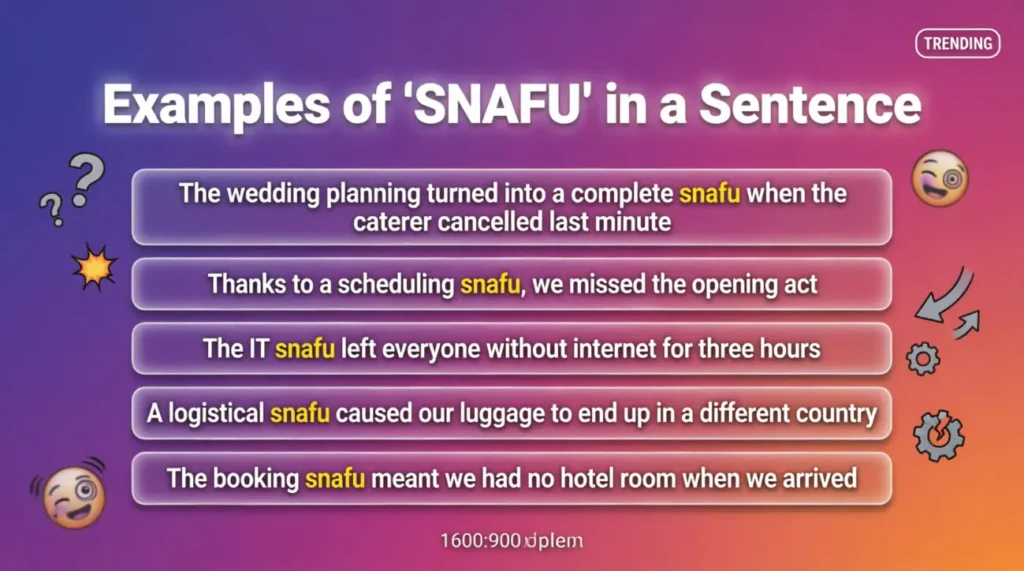
- “There was a scheduling snafu, so we ended up with two meetings booked at the same time.”
- “The whole event nearly fell apart because of a last-minute catering snafu.”
- “Thanks to a technical snafu, half the emails were never actually sent.”
- “It was a total snafu at the airport, three gate changes in twenty minutes.”
- “A paperwork snafu delayed the shipment by almost a week.”
- “The team laughed off the snafu and got back to work within the hour.”
- “Every family reunion has at least one classic snafu, usually involving directions.”
- “A software snafu took the whole website down for a few hours.”
- “It was just a minor snafu, nothing that couldn’t be fixed by the end of the day.”
- “The wedding had one small snafu when the flowers arrived at the wrong venue.”
How to Use “Snafu” Correctly
“Snafu” most commonly works as a noun, describing the chaotic situation itself. It occasionally shows up informally as a verb (“they snafu’d the schedule”) or adjective, though the noun form dominates everyday use.
A few usage notes:
- Keep the tone light. “Snafu” fits situations that are frustrating or inconvenient, not genuinely tragic. Using it for a serious disaster can sound oddly dismissive.
- Pair it naturally with words like: scheduling, technical, paperwork, logistical, and communication to specify what kind of mess occurred.
- Lowercase is standard. Since “snafu” now functions as an ordinary English word rather than a formal acronym, most style guides treat it as lowercase, not all-caps “SNAFU.”
- Know its tone is slightly informal. “Snafu” fits casual and semi-professional writing well, though very formal documents might opt for a more neutral word like “error” or “issue.”
Common Mistakes to Avoid

- Using it for a serious tragedy. “Snafu” implies confusion and disorganization, not genuine catastrophe save it for messes, not real emergencies or disasters.
- Writing it in all caps in casual writing. While “SNAFU” reflects its acronym origin, everyday usage almost always treats it as a normal lowercase word.
- Forgetting its military origin entirely. While not necessary for everyday use, knowing the acronym’s backstory helps explain the word’s distinctive, almost comic tone.
- Assuming it’s a recent slang term. “Snafu” has been part of everyday English for many decades. It’s not a new or trendy word, even though it still sounds fresh and punchy.
Similar Words and Phrases
| Word/Phrase | Meaning | How It Differs |
| Mishap | A small accident or unlucky event | Generally implies less chaos and confusion than “snafu” |
| Fiasco | A complete, embarrassing failure | Usually implies a bigger, more public failure than a typical snafu |
| Mix-up | A confusion or mistake, often involving miscommunication | Very close in meaning, though slightly more neutral in tone |
| Debacle | A disastrous, humiliating failure | Carries a much heavier, more serious tone than “snafu” |
| Glitch | A minor malfunction, especially technical | Narrower in scope, usually limited to technology or systems |
Opposite Words and Phrases
| Word/Phrase | Meaning | Why It’s an Opposite |
| Smooth sailing | Everything going exactly as planned | Directly opposite to the chaos implied by “snafu” |
| Seamless | Flawless and without any noticeable problems | Opposite of the disorganized mess a snafu describes |
| Well-oiled machine | An operation running efficiently and without issues | Contrasts sharply with the confusion of a typical snafu |
| Flawless execution | A plan carried out perfectly, without mistakes | The literal opposite outcome to a snafu |
Pronunciation
“Snafu” is pronounced sna-FOO, with the stress on the second syllable.
Quick Facts
| Fact | Detail |
| Meaning | A confusing, chaotic mess or mix-up |
| Origin | U.S. military slang, WWII-era acronym |
| Stands for | “Situation Normal: All Fouled Up” |
| Part of speech | Noun (occasionally used informally as a verb or adjective) |
| Tone | Casual, often lightly humorous |
| Common pairing | Scheduling, technical, paperwork, or logistical snafu |
Frequently Asked Questions
It means a confusing, chaotic mess or mix-up — usually frustrating rather than genuinely disastrous.
It stands for “Situation Normal: All Fouled Up,” an acronym that started as U.S. military slang, originally with a cruder word in place of “fouled.”
Both. It began as military slang but has been part of everyday English for decades, used far beyond any military context.
Not usually. Even though it started as an acronym, modern usage treats it as a regular lowercase English word.
Yes, in most casual or semi-formal contexts. It’s a widely accepted, mainstream English word, though very formal documents might choose a more neutral term instead.
It generally fits confusing, disorganized situations rather than true tragedies. Using it for a genuine disaster can sound out of place.
Mainly a noun, though it occasionally appears informally as a verb or adjective in casual speech.
“Sna-FOO,” with stress on the second syllable.
It means a confusing, chaotic mess or mix-up usually frustrating rather than genuinely disastrous.
It stands for “Situation Normal: All Fouled Up,” an acronym that started as U.S. military slang, originally with a cruder word in place of “fouled.”
Both. It began as military slang but has been part of everyday English for decades, used far beyond any military context.
Not usually. Even though it started as an acronym, modern usage treats it as a regular lowercase English word.
Yes, in most casual or semi-formal contexts. It’s a widely accepted, mainstream English word, though very formal documents might choose a more neutral term instead.
It generally fits confusing, disorganized situations rather than true tragedies. Using it for a genuine disaster can sound out of place.
Mainly a noun, though it occasionally appears informally as a verb or adjective in casual speech.
“Sna-FOO,” with stress on the second syllable.
Key Takeaways
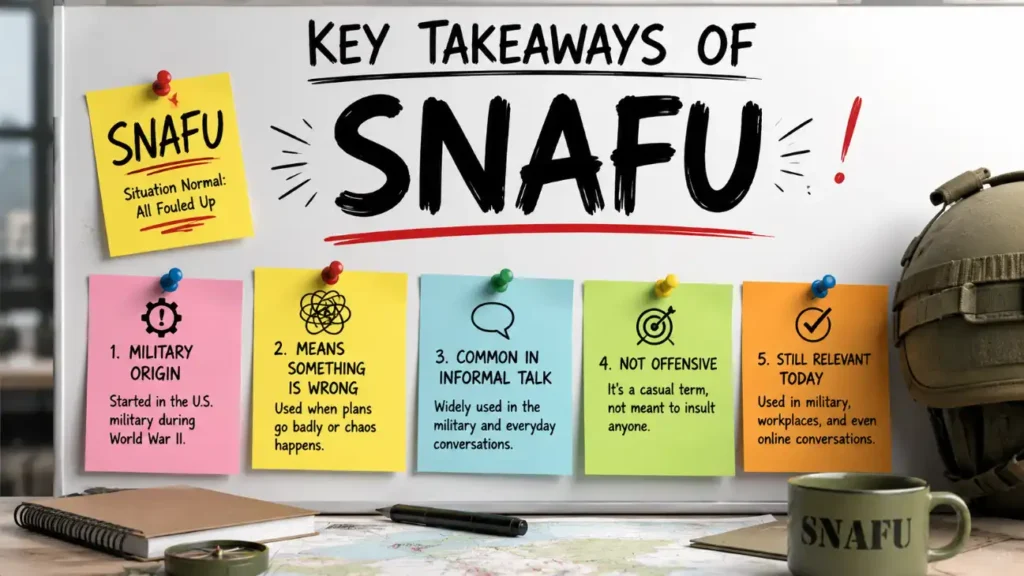
- “Snafu” means a chaotic, confusing mess or mix-up, usually frustrating rather than catastrophic.
- It originated as WWII-era U.S. military slang, standing for “Situation Normal: All Fouled Up.”
- The word softened over time into a mainstream, everyday English term unrelated to military context.
- It works best for lighter, fixable messes not genuine tragedy or disaster.
- Modern usage treats “snafu” as an ordinary lowercase noun rather than a formal acronym.
Conclusion
“Snafu” survived its journey from gritty wartime slang to everyday office vocabulary because it fills a very specific gap: a word for chaos that feels almost routine, the kind of mess you shrug off rather than panic over. That dark, resigned humor baked into its military origin still echoes every time someone uses it today, even if most people saying it have no idea it was ever an acronym at all.
Part of what makes the word so durable is its versatility. A scheduling snafu, a shipping snafu, a technical snafu the word bends to fit almost any minor disaster without ever sounding overly dramatic, which is exactly why it’s held its place in casual English for generations.
Next time your plans fall apart in some small, confusing way, you’ll have the perfect word ready one with a surprisingly sharp military history hiding behind its light, almost playful sound.

I am Stephen King an American author known for compelling storytelling. At writemora.com, we value clear, accurate, and reader-focused content inspired by excellence in writing.