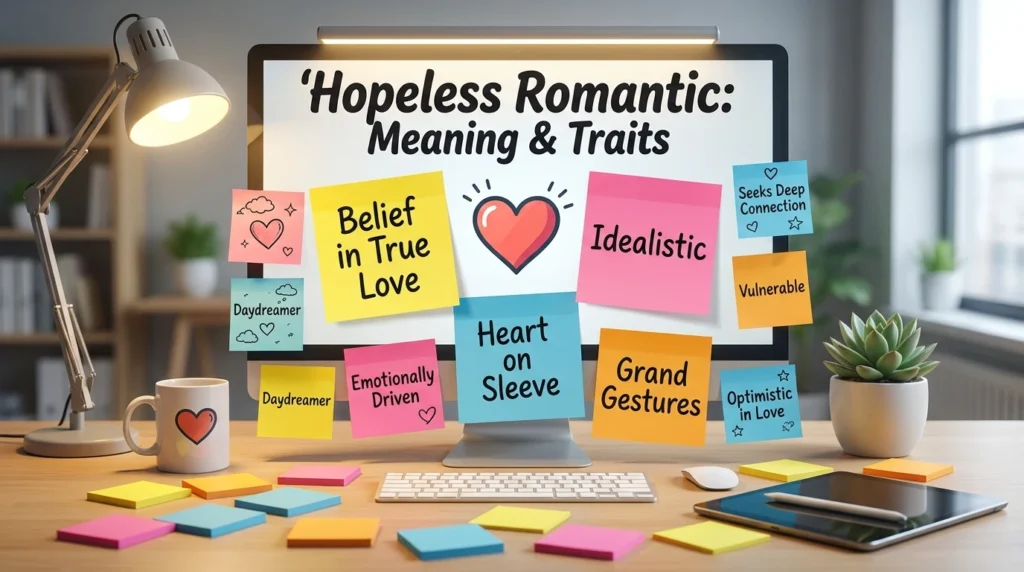
Someone who tears up during the wedding scene, believes in soulmates, and still writes love letters in a world of text messages that’s the classic picture of a hopeless romantic. The hopeless romantic meaning describes a person deeply devoted to the idea of romantic love, often to the point of idealizing it, even when past experience or realistic odds suggest they should temper their expectations.
This guide covers exactly what “hopeless romantic” means, where the phrase comes from, the traits that usually go along with it, and answers to the questions people ask most often. By the end, you’ll know if the label fits you (or someone you know) and how to use the phrase naturally.
What “Hopeless Romantic” Means
The simple version:
A hopeless romantic is someone who believes deeply in love, courtship, and grand romantic gestures often idealistically and keeps believing in them even after disappointment or heartbreak.
The fuller picture:
The phrase blends two ideas that seem to contradict each other. “Romantic” describes someone drawn to love, affection, and the emotional, idealized side of relationships. “Hopeless” doesn’t mean the person has given up, it means their devotion to romance runs so deep it feels beyond their own control, almost like an incurable condition. A hopeless romantic can’t help wanting the fairy-tale version of love: grand gestures, deep emotional connection, and the belief that real, lasting love exists and is worth waiting for.
People use the phrase both affectionately and self-deprecatingly. Someone might call themselves a hopeless romantic with a bit of a wry smile, acknowledging that their expectations for love run higher than what everyday dating life usually delivers and admitting they wouldn’t want it any other way.
Origin and History
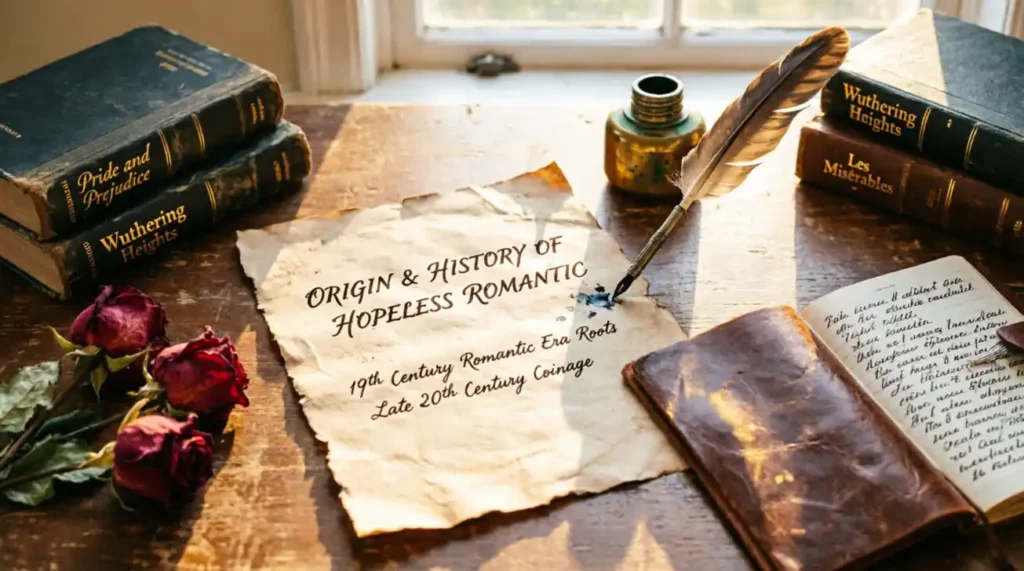
The phrase “hopeless romantic” grew out of a much older use of the word “hopeless” , one that means “beyond hope of change or cure,” similar to how English speakers describe a “hopeless case” or a “hopeless person with a drug.” Applied to romance, it captures the sense that a person’s devotion to love feels unshakable and almost involuntary, not something they’d ever want to talk themselves out of.
Popular culture, especially romantic films, novels, and songs, helped cement “hopeless romantic” as a recognizable personality type over the past several decades. Characters who chase grand romantic gestures, believe firmly in soulmates, or fall in love easily and completely became shorthand for the archetype, and the phrase itself became a common, affectionate way to describe that kind of person in everyday conversation.
The exact moment the phrase entered common usage isn’t tied to one clear source like many idioms, it built up gradually through repeated use in writing and speech rather than starting from a single traceable origin.
Different Meanings and Contexts
Self-description (most common). People frequently use “hopeless romantic” to describe themselves, often with a light, self-aware tone acknowledging their idealistic view of love without treating it as a flaw.
Describing someone else, affectionately. Friends and family often use the phrase warmly to describe a loved one who believes strongly in love, gets emotionally invested quickly, or holds onto romantic ideals despite past heartbreak.
Dating and relationship contexts. In dating profiles, conversations, and relationship advice writing, the phrase signals someone’s general approach to love usually implying sincerity, emotional investment, and a preference for depth over casual dating.
Slightly critical or cautionary use. Occasionally, the phrase carries a gentle warning tone, suggesting that someone’s idealism about love might set them up for repeated disappointment if their expectations stay too high or too detached from realistic relationship dynamics.
Examples of “Hopeless Romantic” in a Sentence
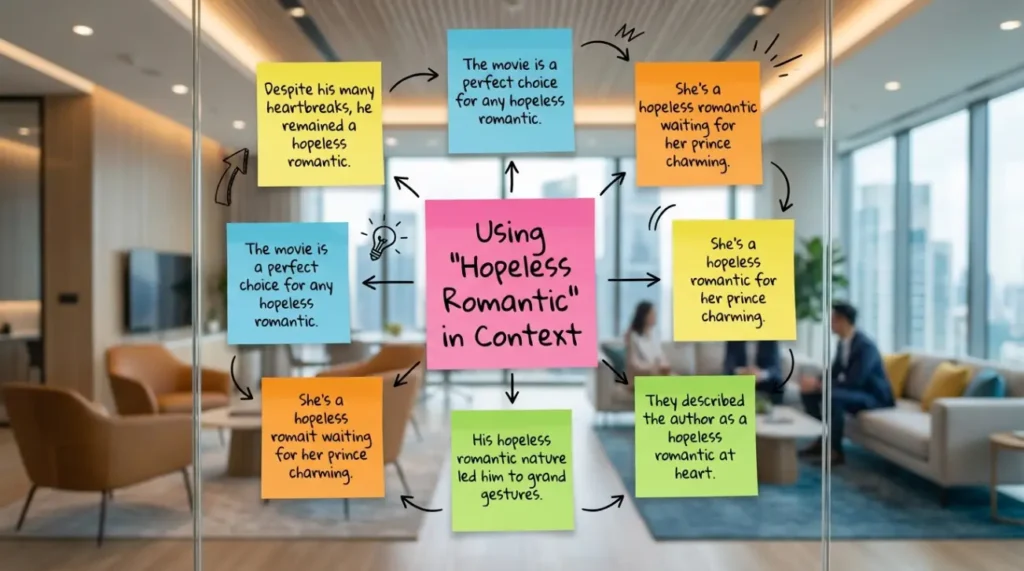
- “I’m a hopeless romantic. I still believe in love at first sight.”
- “He’s such a hopeless romantic that he planned their whole first date around her favorite movie.”
- “As a hopeless romantic, she never gave up on the idea of a soulmate.”
- “The film follows a hopeless romantic navigating modern dating apps.”
- “My grandmother was a hopeless romantic her whole life, right up until she met my grandfather.”
- “Being a hopeless romantic means I cry at literally every wedding, even strangers’ weddings.”
- “He calls himself a hopeless romantic, but really, he just loves grand gestures.”
- “She’s a hopeless romantic who still keeps every letter her partner has ever written her.”
- “The hopeless romantic in me wants to believe every rom-com ending is realistic.”
- “As a self-proclaimed hopeless romantic, he proposed with fireworks and a string quartet.”
How to Use “Hopeless Romantic” Correctly
“Hopeless romantic” functions as a noun phrase, describing a type of person rather than an action or event.
A few usage notes:
- It’s usually a compliment, or at least affectionate. Despite the word “hopeless,” the phrase almost never carries a harsh or insulting tone in everyday use; it leans warm, even when used self-deprecatingly.
- Pair it with context for extra warmth. Adding a specific example (“hopeless romantic who still writes love letters”) makes the phrase land more personally than using it alone.
- Don’t confuse “hopeless” with “hopeless” in its literal sense. In this phrase, “hopeless” describes an unshakable devotion, not despair or giving up.
- It works as a self-label or a description of someone else. Both uses are equally common and natural in everyday conversation.
Common Mistakes to Avoid
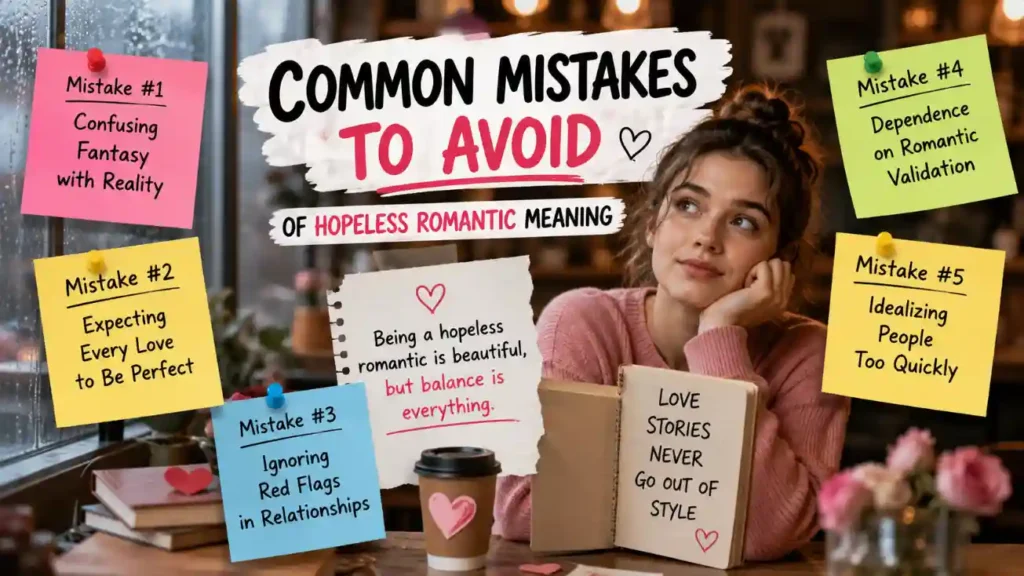
- Reading “hopeless” too literally. The phrase doesn’t mean someone has lost hope in love, quite the opposite. It means their belief in love runs so deep it feels impossible to shake.
- Assuming it always means naive or unrealistic. While the phrase can carry a gentle, cautionary undertone, most uses describe genuine warmth and emotional sincerity rather than poor judgment.
- Using it sarcastically without context. Because the phrase usually reads as affectionate, using it with a sharp, mocking tone can come across as confusing or unkind without clear context.
- Overusing it as a personality label. Like most identity-related phrases, it can start to feel like a cliché if someone leans on it constantly instead of describing specific traits or actions.
Similar Words and Phrases
| Phrase | Meaning | How It Differs |
| Hopeful romantic | A more measured, optimistic-but-realistic approach to love | Suggests belief in love without quite the same all-in, unshakable intensity as “hopeless romantic” |
| Die-hard romantic | Someone deeply and stubbornly devoted to romantic ideals | Very close in meaning, though slightly less common as a set phrase |
| Idealist | Someone who holds high, sometimes unrealistic standards or beliefs | A broader term not limited specifically to romance |
| Sentimental | Prone to strong emotional or nostalgic feelings | Focuses on emotional tenderness generally, not specifically romantic love |
| Believer in true love | Someone convinced that deep, lasting romantic love is real and attainable | Describes the same core belief, spelled out rather than idiomatically |
Opposite Words and Phrases
| Phrase | Meaning | Why It’s an Opposite |
| Cynic (about love) | Someone skeptical or distrustful of romantic love | Directly opposite in outlook and emotional stance |
| Commitment-phobe | Someone who avoids serious romantic commitment | Opposite approach to relationships and emotional investment |
| Pragmatist (about relationships) | Someone who approaches love practically rather than idealistically | Prioritizes realism over romantic idealism |
| Emotionally guarded | Someone cautious about opening up romantically | Contrasts with the openness and vulnerability typical of a hopeless romantic |
Pronunciation
“Hopeless romantic” is pronounced as written: HOHP-liss roh-MAN-tik. Both words follow standard English pronunciation with no unusual stress patterns.
Quick Facts
| Fact | Detail |
| Meaning | Someone deeply and idealistically devoted to romantic love |
| Tone | Usually warm or affectionate, sometimes self-deprecating |
| Part of speech | Noun phrase |
| Common setting | Dating conversations, self-description, romantic fiction and film |
| Related idiom | “Hopeful romantic,” a more measured variation |
| Typical traits | Belief in soulmates, love at first sight, and grand romantic gestures |
Frequently Asked Questions
What does “hopeless romantic” mean?
It describes someone deeply and idealistically devoted to romantic love believing strongly in things like soulmates, lasting love, and grand romantic gestures.
Is “hopeless romantic” a compliment?
Generally, yes. Despite the word “hopeless,” the phrase usually carries warmth and affection rather than criticism.
Does “hopeless” mean the person has given up on love?
No, it means the opposite: their devotion to love feels unshakable, almost involuntary, not that they’ve lost hope.
What’s the difference between a “hopeless romantic” and a “hopeful romantic”?
“Hopeless romantic” implies an all-in, sometimes idealistic devotion to love, while “hopeful romantic” suggests a similar belief in love paired with a bit more realism and moderation.
Can a hopeless romantic also be realistic about relationships?
Yes. Being a hopeless romantic describes someone’s emotional outlook and ideals about love, not necessarily their ability to make grounded, practical relationship decisions.
Is “hopeless romantic” used for both human beings?
Yes, the phrase applies equally regardless of gender and describes a personality trait rather than a gendered label.
Where did the phrase “hopeless romantic” come from?
It builds on an older sense of “hopeless” meaning “beyond hope of change,” applied to someone’s unshakable devotion to romantic love, and became popular through decades of use in film, literature, and everyday conversation.
How do you know if you’re a hopeless romantic?
Common traits include believing strongly in soulmates or love at first sight, valuing grand romantic gestures, and staying emotionally hopeful about love even after past heartbreak.
Key Takeaways
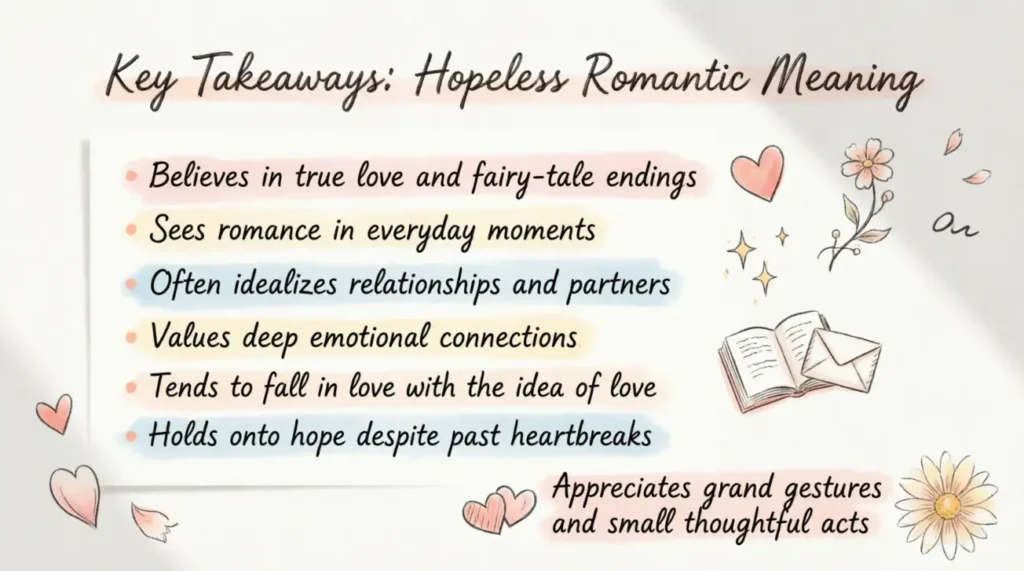
- A hopeless romantic is someone deeply and idealistically devoted to romantic love.
- “Hopeless” in this phrase means unshakable devotion, not despair or giving up.
- The phrase is almost always warm or affectionate, if used to describe yourself or someone else.
- It contrasts with terms like “cynic” or “pragmatist” when it comes to attitudes toward love.
- “Hopeful romantic” offers a slightly more measured, realistic variation on the same idea.
Conclusion
“Hopeless romantic” captures something a lot of people recognize in themselves or someone close to them: an unshakable, almost stubborn belief that love is worth chasing, even after disappointment. That contradiction between “hopeless” and genuine hope is exactly what gives the phrase its warmth: it admits the odds might not always favor the fairy tale, and holds onto the belief anyway.
The phrase has stuck around because so many people relate to it, if they wear the label proudly or notice it in a friend who still believes in grand gestures and soulmates. It turns a trait that could sound naive into something endearing, even admirable, by naming the depth of feeling behind it.
Next time you catch yourself hoping for the fairy-tale ending despite everything you know about real relationships, you’ll have the exact phrase for it and you’ll know it’s less a flaw than a genuinely warm, hopeful way of moving through the world.

I am Stephen King an American author known for compelling storytelling. At writemora.com, we value clear, accurate, and reader-focused content inspired by excellence in writing.