
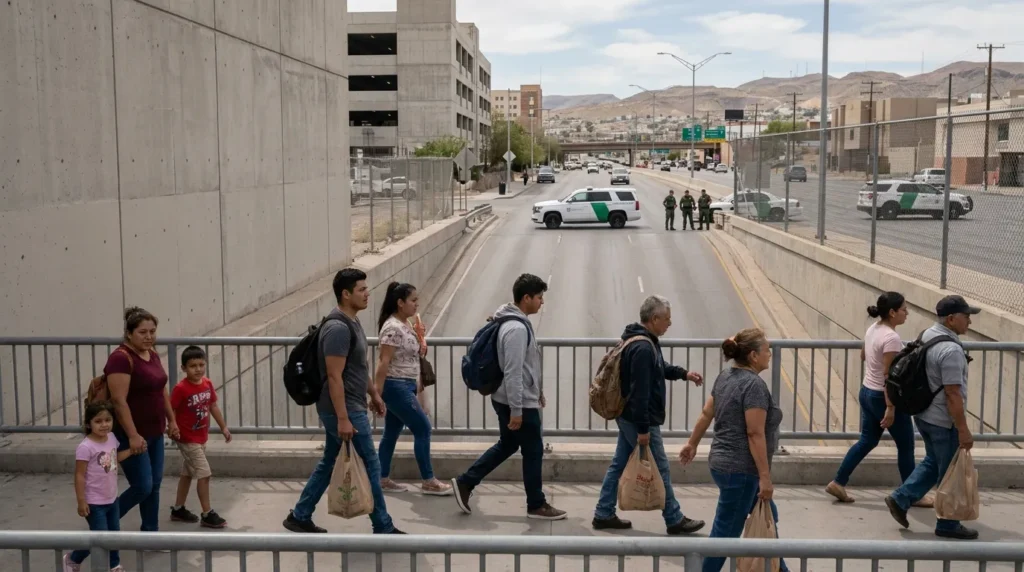
If you’ve heard the term “la migra” in conversation, on the news, or in a song, you might be wondering what it actually means. The short answer: it’s a Spanish slang term for U.S. immigration authorities specifically, ICE (Immigration and Customs Enforcement) and the Border Patrol .
But the term carries a lot more cultural weight than just a simple translation. It reflects decades of history, tension, and even humor within Latino communities in the United States. This guide will break down everything you need to know about “la migra,” from its origins and usage to why you’re seeing it pop up more frequently in 2026.
What Does La Migra Mean?
“La migra” is an informal Spanish term for immigration enforcement agents. Think of it as the slang equivalent of saying “the feds” or “the cops” for immigration .
A Simple Breakdown
- Literal origin: It’s a shortened form of “inmigración” (immigration) .
- Who it refers to: U.S. Immigration and Customs Enforcement (ICE), U.S. Border Patrol, and related agencies .
- Tone: It’s informal and can be used in a matter-of-fact way, with fear, or even with dark humor .
It’s not a term you’d use in a formal, professional setting. Instead, it’s everyday language used in Spanish-speaking communities, often as a quick way to refer to authorities that target immigrants within the U.S.
Where Did the Term Come From?
The term emerged organically as Spanish speakers shortened “inmigratión.” Its popularity grew significantly in the late 20th century.
- 1980s–1990s: The term started appearing more frequently in U.S. Spanish-language media and everyday conversation .
- 2000s–2010s: Its use spread through music, news coverage of immigration issues, and the rise of social media .
- 2020s–Present: The term has become globally recognized. Its usage has spiked, especially since 2025, due to increased national focus on mass deportation plans, which has heavily impacted Latino communities across the country .
How La Migra Is Used in Different Contexts
The meaning of “la migra” can shift slightly depending on who’s saying it and in what situation.
| Context | Meaning / Tone | Example |
| Everyday Caution | A warning to be careful; carries a sense of fear. | “Hurry home, la migra might be around.” |
| Social Media & Memes | Often used humorously or to share information. | Viral videos of people joking about “la migra” at work. |
| Cultural Expression | A symbol of defiance or frustration. | Protest signs and chants using phrases like “Chinga la migra.” |
The Surprising Schoolyard Game: La Migra
In a strange cultural twist, “la migra” is also the name of a controversial game played by high school students, primarily in the San Francisco Bay Area .
What Is the La Migra Game?
The game is a mix of tag and cops-and-robbers. Here’s how it typically works :
- The Roles: Older students (older people) act as “la migra” (ICE agents). Younger students act as “immigrants.”
- The Rules: The “immigrants” get a head start to run and hide. The “agents” chase them in cars, catch them, and take them to a remote location (simulating deportation).
- The Controversy: Parents and community members have called it offensive and racist, especially given the real-world fear of deportation . Others, including some who played it decades ago, say it was just a fun game and not meant to be malicious .
A Voice from the Past
One journalist recalled playing the same game over 30 years ago as a working-class Mexican-American child in Anaheim, California. For his community, it wasn’t a statement about politics or hatred of immigrants, it was a way to joke about and process a very real threat.
“We were children who knew all about the terrors of the Border Patrol and we were going to have fun at their expense, dammit.”
– Gustavo Arellano, writing for Reason magazine
Related Phrases You Might See
As “la migra” has become more common, so have related phrases that are even more direct.
Chinga La Migra
You might see this phrase on protest signs, shirts, or social media. It’s a blunt and aggressive protest phrase. “Chinga” is strong slang, roughly translating to “f—” in English. So, “Chinga la migra” translates to “f— ICE” or “f— the Border Patrol” . It’s meant to express anger, frustration, and resistance against immigration enforcement systems.
Quick Facts
| Fact | Detail |
| Literal Translation | Derived from “immigration” |
| Primary Meaning | U.S. immigration authorities (ICE, Border Patrol) |
| Context | Informal, slang |
| Also Known As | A controversial high school game in California |
| Controversial Slogan | “Chinga la migra” – expresses frustration with immigration enforcement |
FAQs
Is “la migra” a bad word?
No, it’s not a profanity or a slur. It’s slang. However, it carries a lot of emotional weight because it represents a force that many people find frightening .
Is “la migra” the same as ICE?
Yes, it’s a colloquial term that specifically refers to ICE and other immigration agencies like the Border Patrol .
Why are people saying “la migra” more now?
The term has seen a significant rise in usage since 2025 due to heightened national attention on mass deportation efforts, which have directly affected Latino communities .
What is the “la migra” game?
It’s a controversial, unofficial game played by some high school students, primarily in California. Older people act as immigration agents chasing younger students, who play the role of immigrants .
What does “chinga la migra” mean?
It’s a blunt protest phrase that roughly translates to “f— ICE.” It’s used to express anger and resistance toward immigration enforcement .
Key Takeaways
- “La migra” is Spanish slang for U.S. immigration authorities like ICE and the Border Patrol .
- It’s derived from the Spanish word for immigration (“immigration”) .
- Its use has increased recently due to more focus on deportation policies .
- It can also refer to a controversial student game called “La Migra,” played in parts of California .
- More aggressive phrases like “Chinga la migra” are used as political protest statements .
Conclusion
“La migra” is more than just a slang translation. It’s a window into the relationship between Latino communities and U.S. immigration enforcement. It’s a term that can be a simple warning, a source of dark humor, a cultural touchstone, or a battle cry of resistance.
Understanding the term means understanding the context if it’s coming from a worried family member, a meme on social media, or a protest sign. The next time you hear it, you’ll know exactly what it means and why it resonates so deeply.

I am Stephen King an American author known for compelling storytelling. At writemora.com, we value clear, accurate, and reader-focused content inspired by excellence in writing.